Iceland has over 10,000 named waterfalls. That number alone tells you something about what kind of country this is — water is everywhere, falling off everything, in every direction.
So when it comes to choosing the best waterfalls in Iceland, any list is going to leave someone’s favorite out. We know that. We’ve accepted it. With over four years of guiding private tours across every corner of the island, we’ve stood in front of hundreds of them — in rain, in snow, in midnight sun, and in that particular sideways wind that turns waterfall mist into a full-body shower.
This top obviously does not pretend to list them all. So we had to make a choice. Whether they are the most famous ones, or some less visited ones, we limited ourselves to 25 when it came to choosing our favourites. Do we know more? Yes, of course. Do we love more? Yes, obviously.
They are not particularly arranged in order of preference.
A few notes before we start: some of these waterfalls sit right next to the road. Others require a solid hike or a highland-capable vehicle. We’ve noted access details for each one, along with which of our private day tours and multiday tours include them — because honestly, many of Iceland’s best waterfalls are best experienced with someone who knows exactly when to show up and where to stand.
But here come 25 waterfalls.
#25 — Faxafoss
Where: Golden Circle How to visit: Golden Circle Farm to Table (with customization) · Golden Circle Essentials
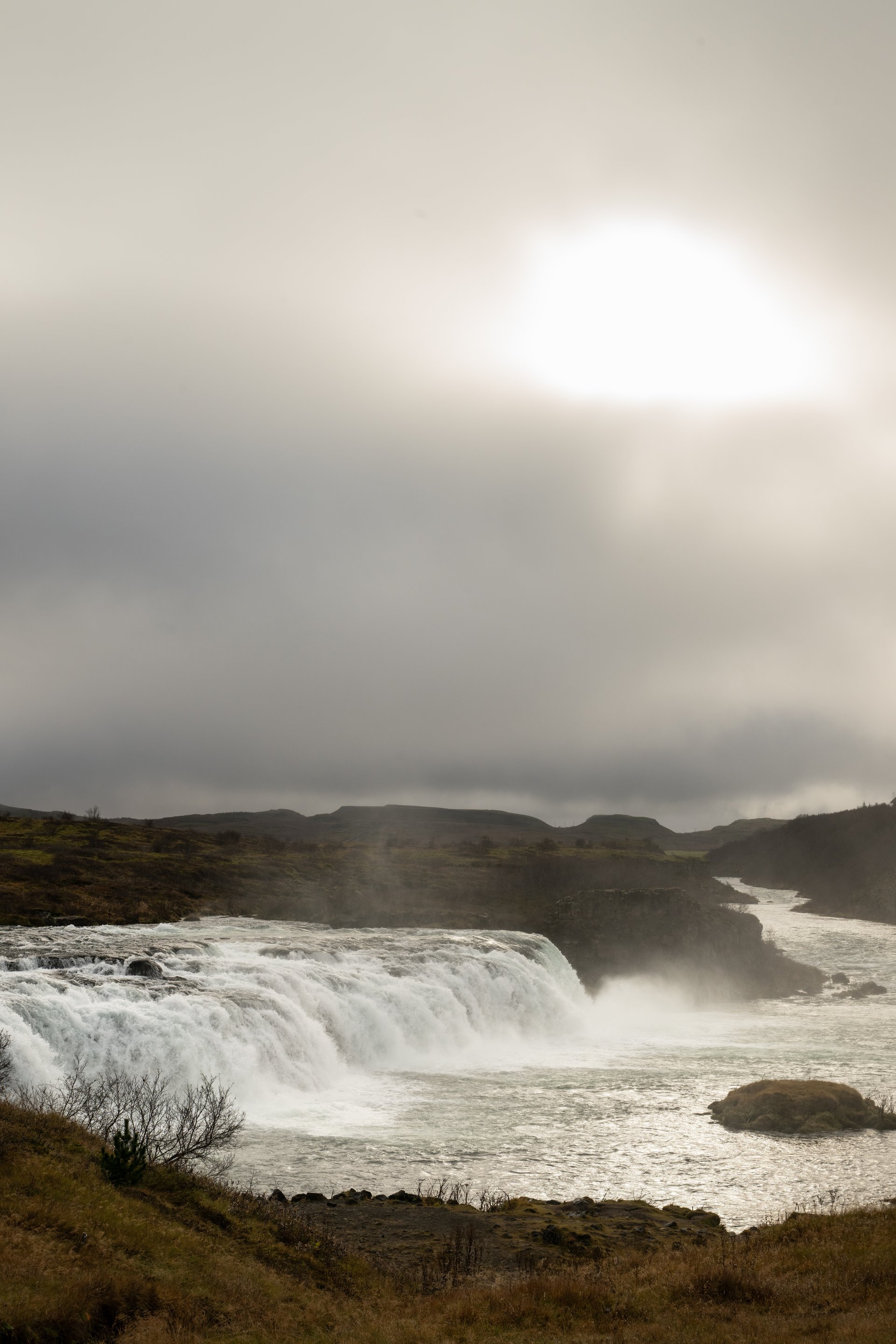
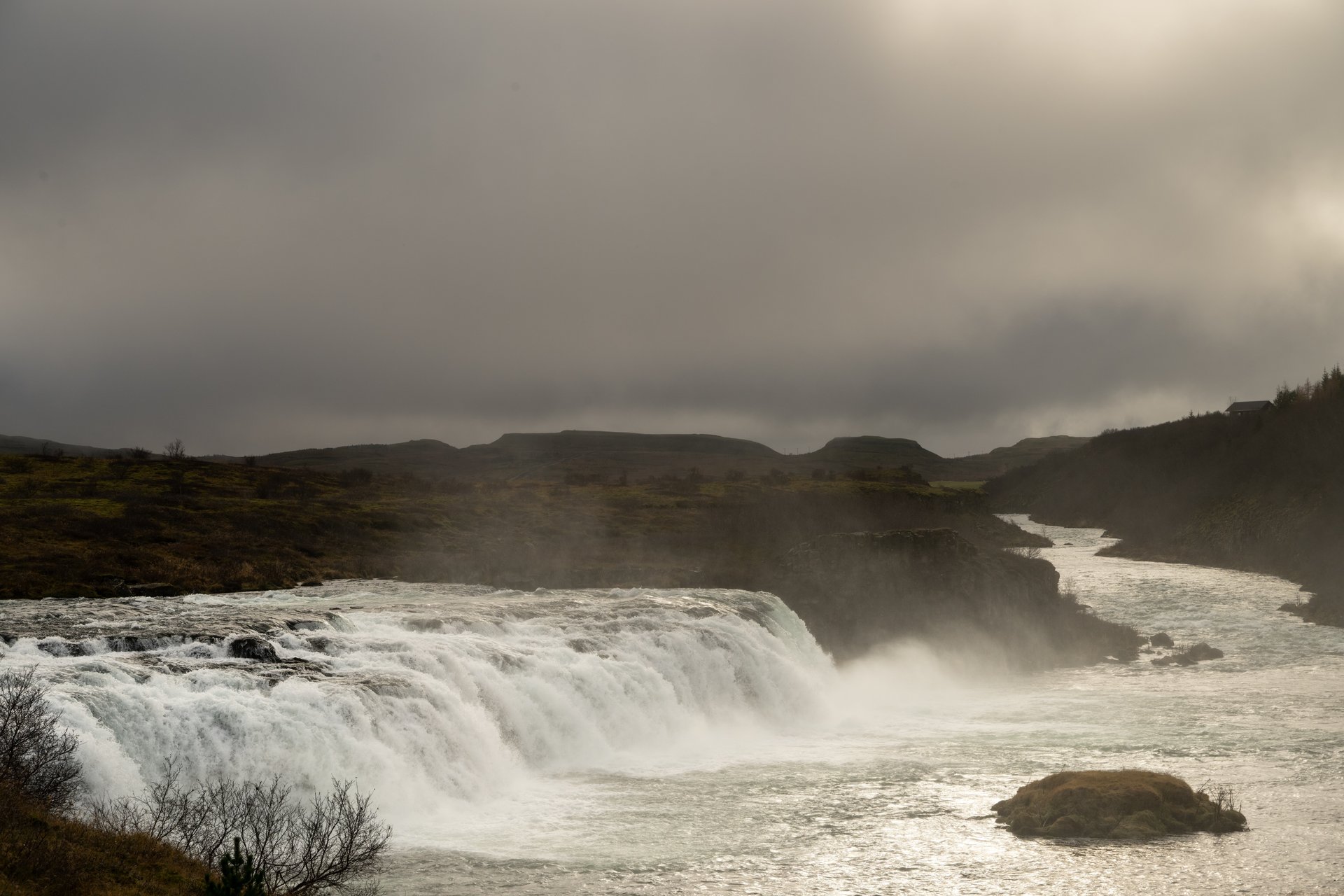
Faxafoss doesn’t make many top-10 lists, and that’s part of what makes it worth visiting. This wide, powerful cascade on the Tungufljót river sits just off the Golden Circle route, and most tour buses drive right past it without stopping.
It’s not tall — it’s broad. The water spreads across a wide basalt ledge and drops in a thundering curtain that’s especially impressive after heavy rain or during spring snowmelt. What strikes you first is the sound. Then the scale. It’s one of those waterfalls that photographs can’t capture because the real experience is about standing next to something that shakes the ground beneath your feet.
We include Faxafoss as a stop on our Golden Circle tours when clients want to go beyond the standard three stops — and it never disappoints.
#24 — Urriðafoss
Where: South Iceland How to visit: South Coast Discovery · 2-Day South Coast · South Coast & Glacier Hike (with customization)
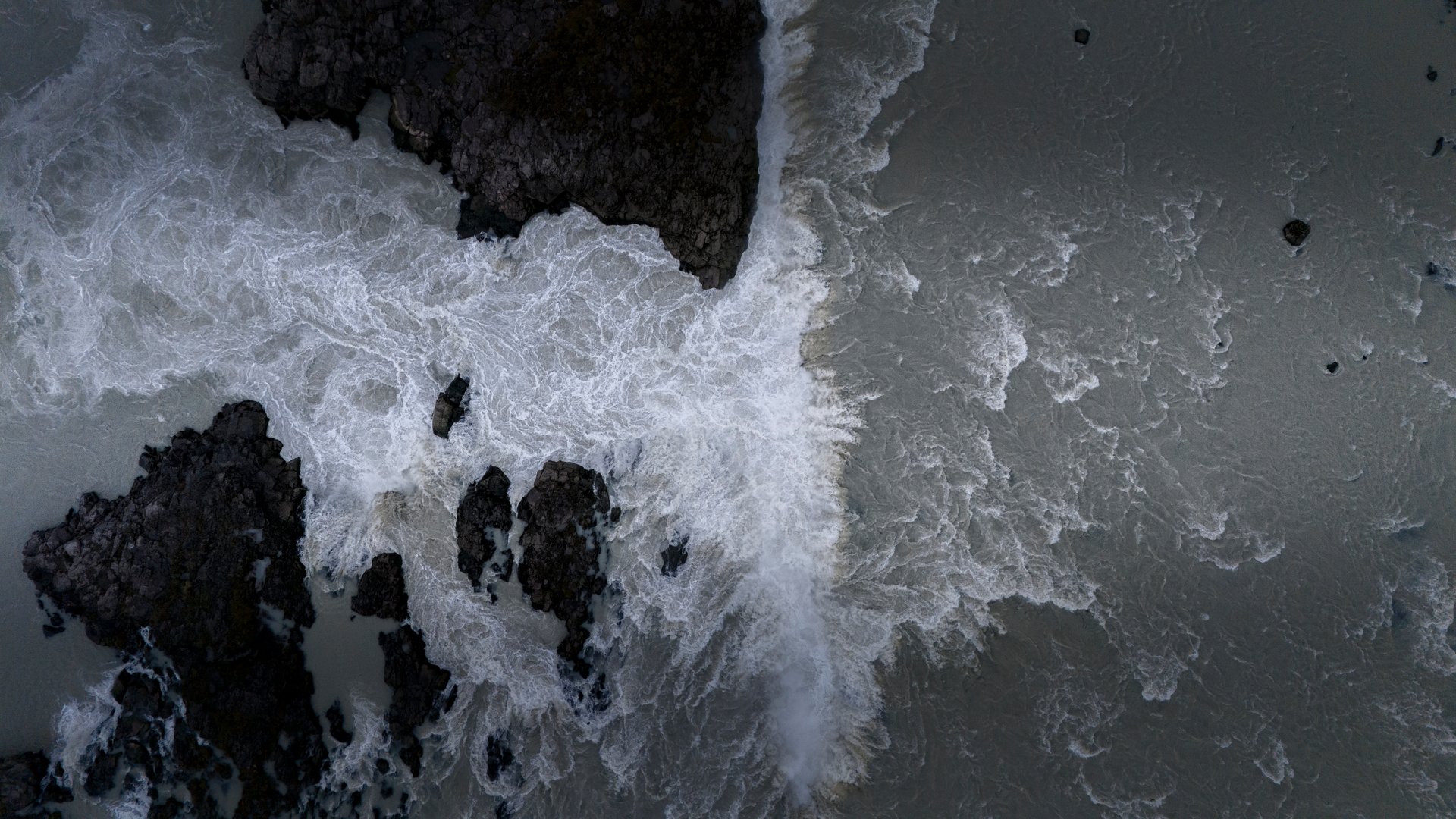
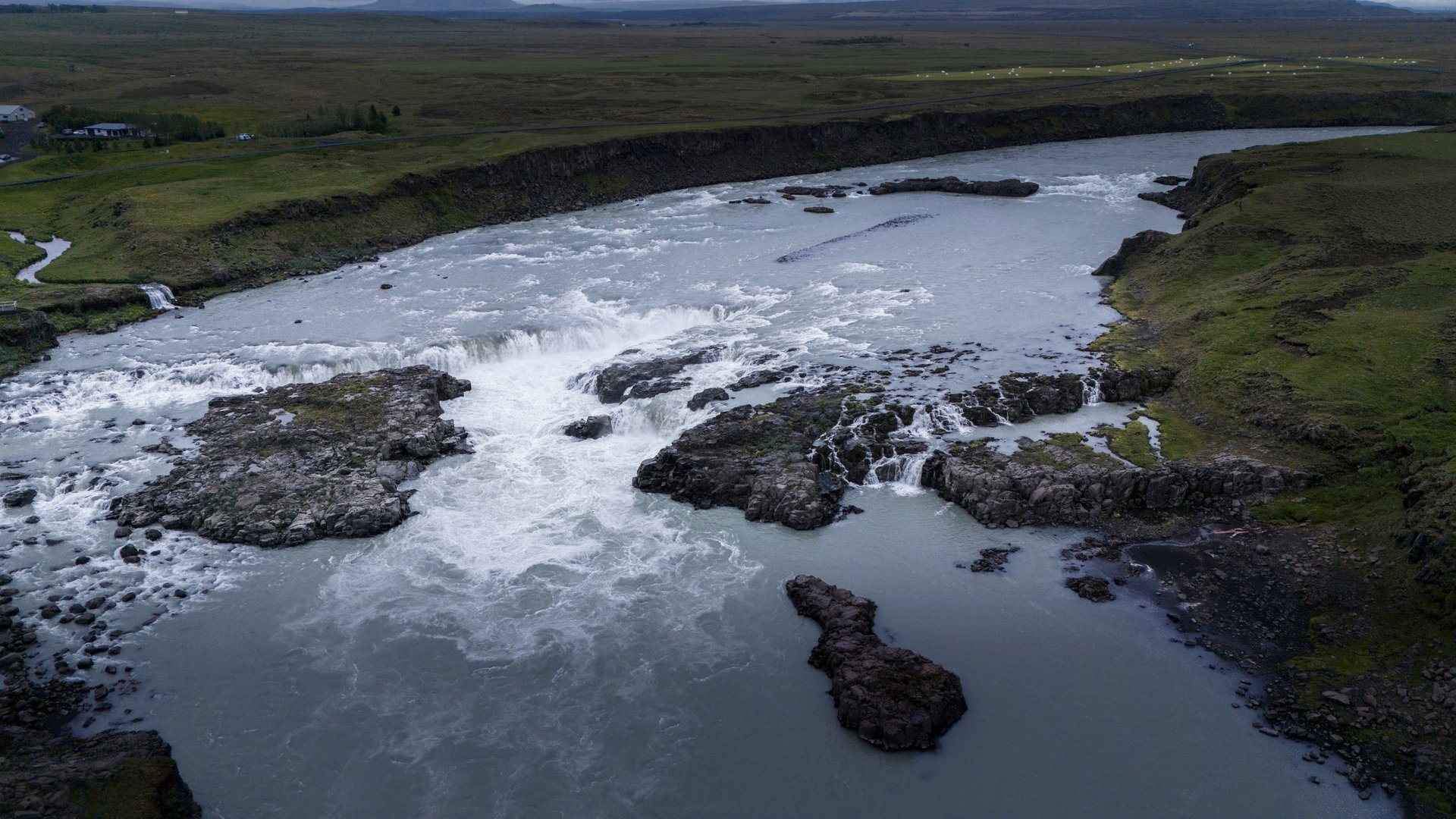
Urriðafoss holds a quiet distinction: it’s considered the waterfall with the highest water volume in Iceland. Not the tallest, not the widest — but the one moving the most water at any given moment. The Þjórsá river, Iceland’s longest, funnels through a narrow channel and drops into a churning basin that’s mesmerizing to watch.
It sits just off Route 1, south of Selfoss, and takes less than five minutes to walk to from the road. Despite this, it gets a fraction of the traffic that Seljalandsfoss or Skógafoss attract. On most days, you’ll have it to yourself.
The surrounding landscape is flat and open — farmland and river delta — which makes the sudden violence of the water all the more striking. It’s an excellent first or last stop on a South Coast itinerary.
#23 — Gluggafoss
Where: South Iceland How to visit: South Coast Discovery · 2-Day South Coast · South Coast & Glacier Hike (with customization)
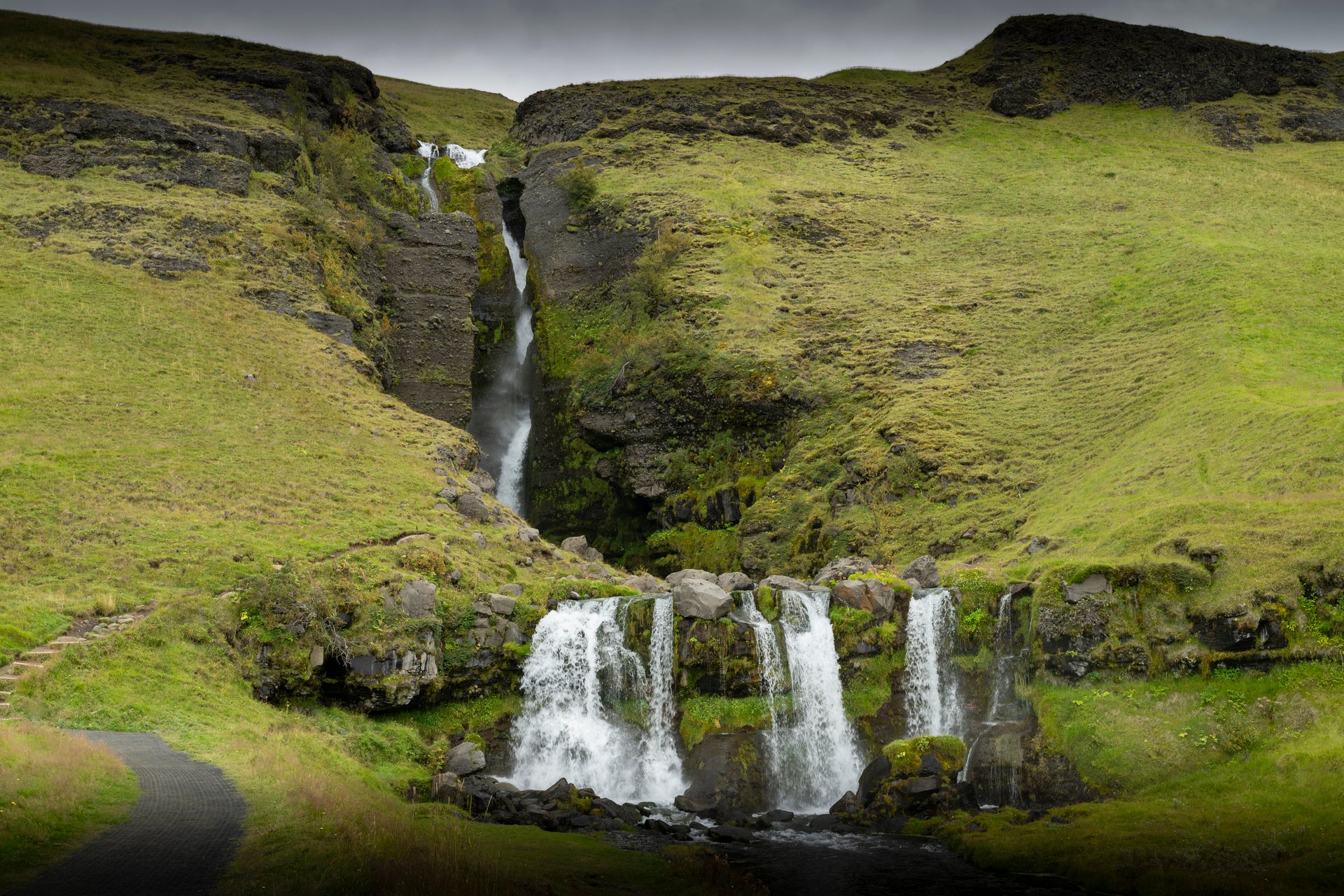
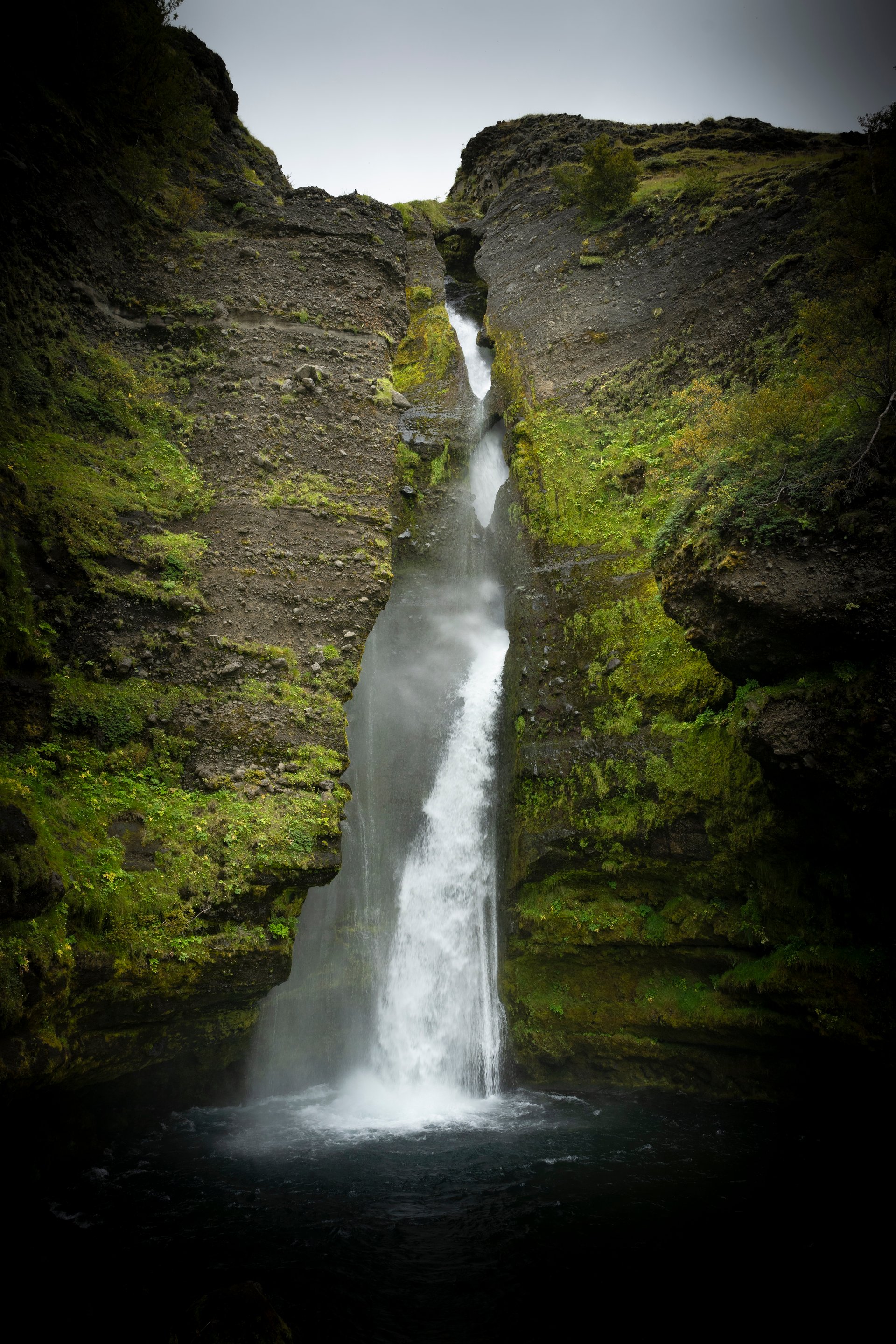
Also known as Merkjárfoss, Gluggafoss — “Window Falls” — gets its name from the holes in the rock face through which the water cascades. It’s a genuinely unusual waterfall, and one that rewards a short walk from the parking area near the Fljótshlíð farm district.
The water has carved its way through the cliff over centuries, creating multiple tiers and openings. Depending on the water level, you might see water pouring through three or four different “windows” simultaneously. In winter, the surrounding rock face glazes with ice in a way that’s hard to describe and impossible to forget.
Gluggafoss is rarely crowded. It sits in the shadow of its famous neighbors to the east — Seljalandsfoss and Skógafoss — but for anyone who values seeing something genuinely different, it’s a highlight.
#22 — Gullfoss
Where: Golden Circle How to visit: Golden Circle Farm to Table · Golden Circle Essentials
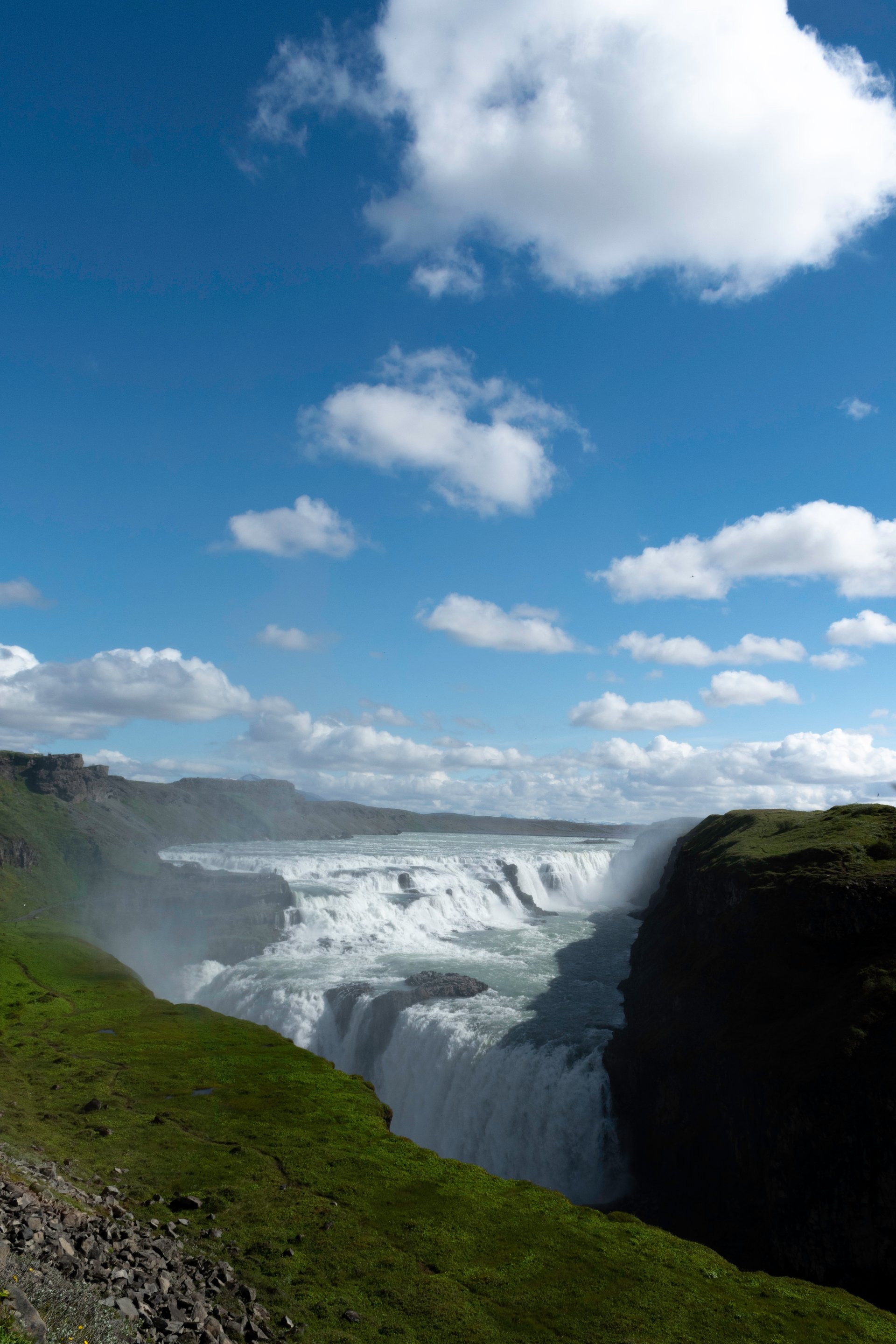
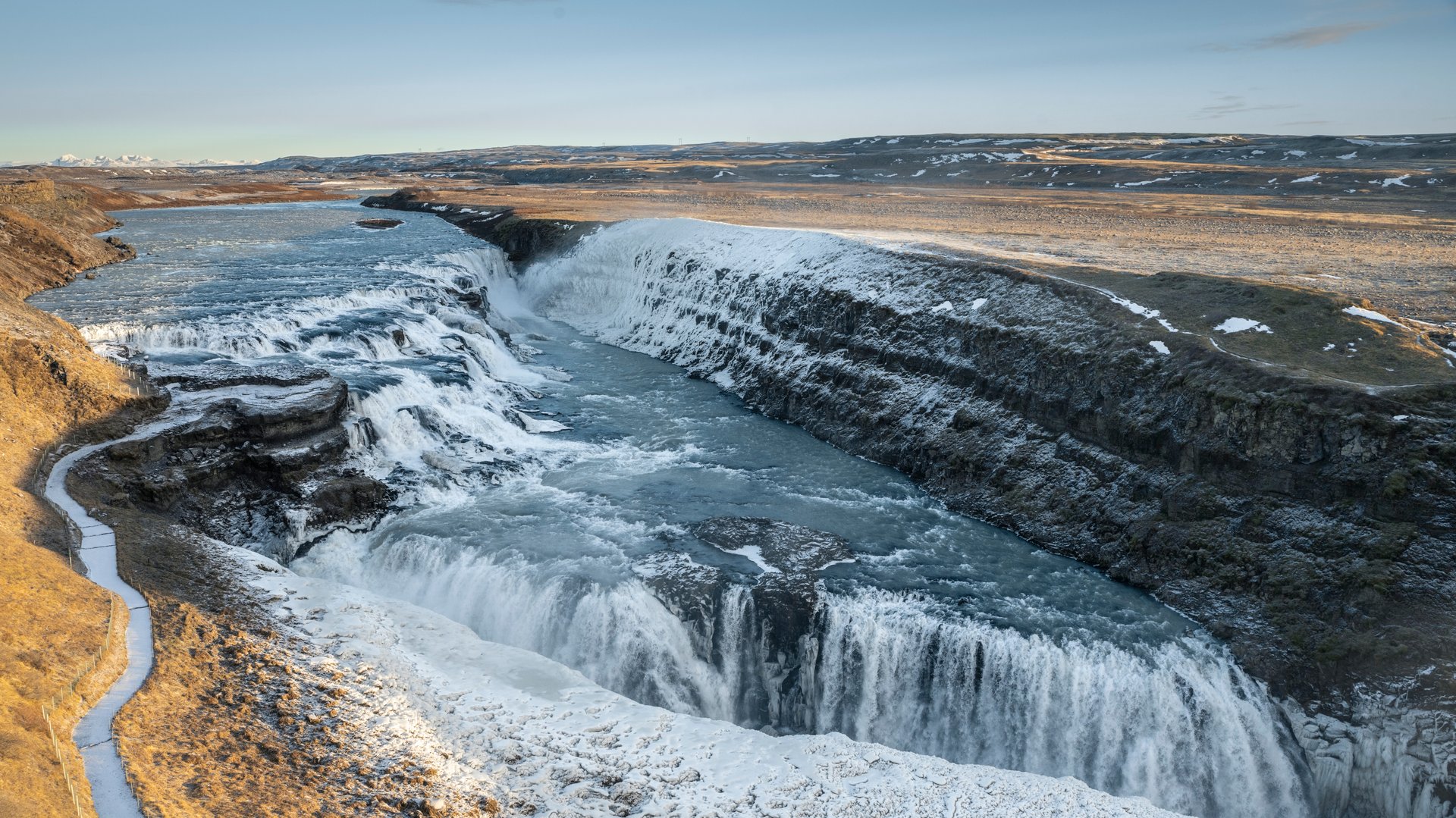
There’s a reason Gullfoss is on every Iceland itinerary — and a reason it still impresses even when you’ve seen it a hundred times. The Hvítá river drops in two stages into a 32-meter-deep canyon, and depending on where you stand, the falls seem to disappear into the earth itself.
Gullfoss is raw power. In summer, when glacial meltwater swells the river, the spray can soak you from the upper viewing platform. In winter, the canyon walls frost over and the light turns everything gold — which is, incidentally, how the waterfall got its name.
What most visitors don’t realize is that the experience changes dramatically depending on the time of day and the viewing platform you choose. The upper path gives you the wide shot; the lower path puts you right at the edge of the canyon. On our Golden Circle tours, we time the visit to avoid the worst of the crowds and make sure clients see it from both angles.
#21 — Kvernufoss
Where: South Coast of Iceland How to visit: South Coast Discovery · 2-Day South Coast · South Coast & Glacier Hike (with customization)
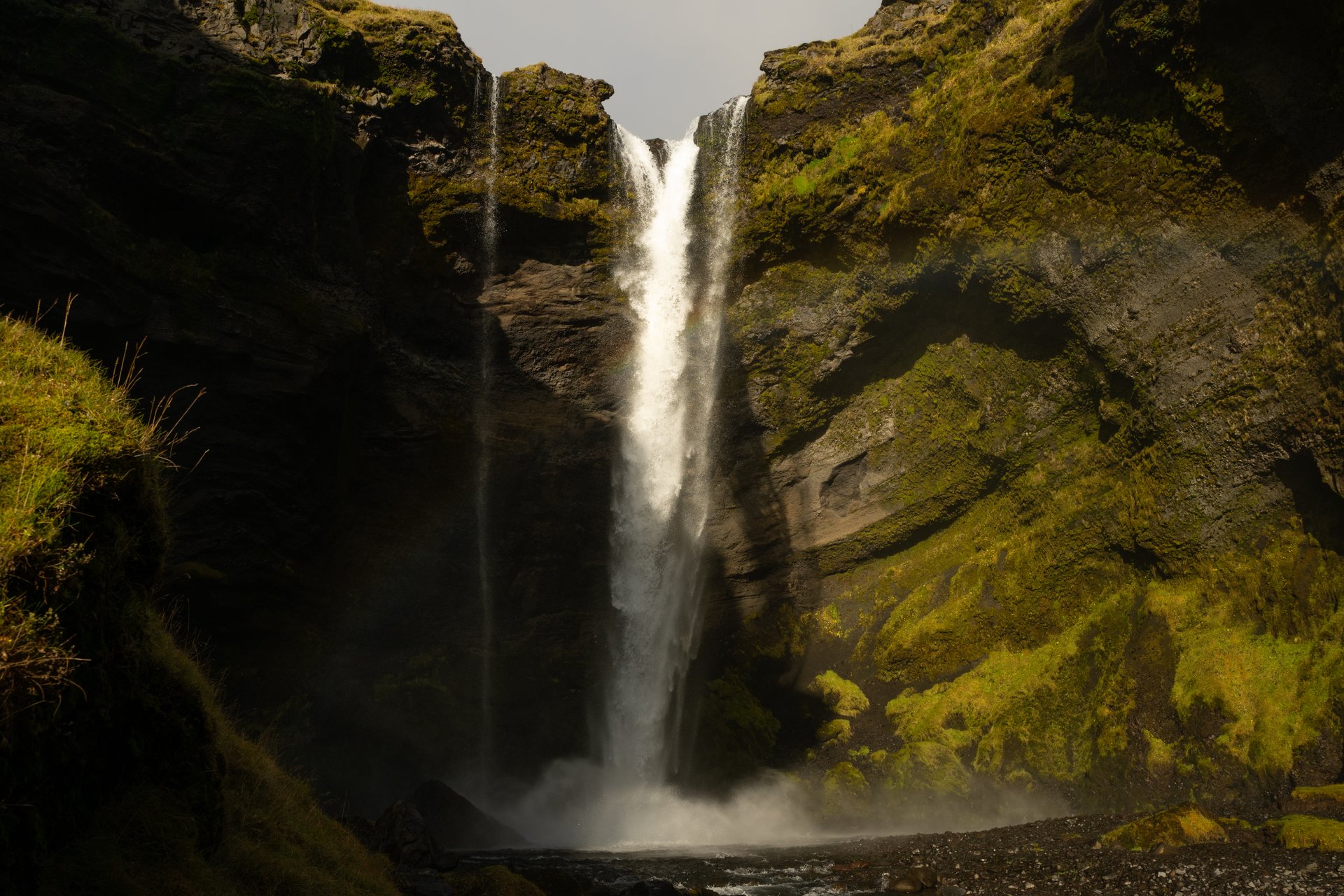
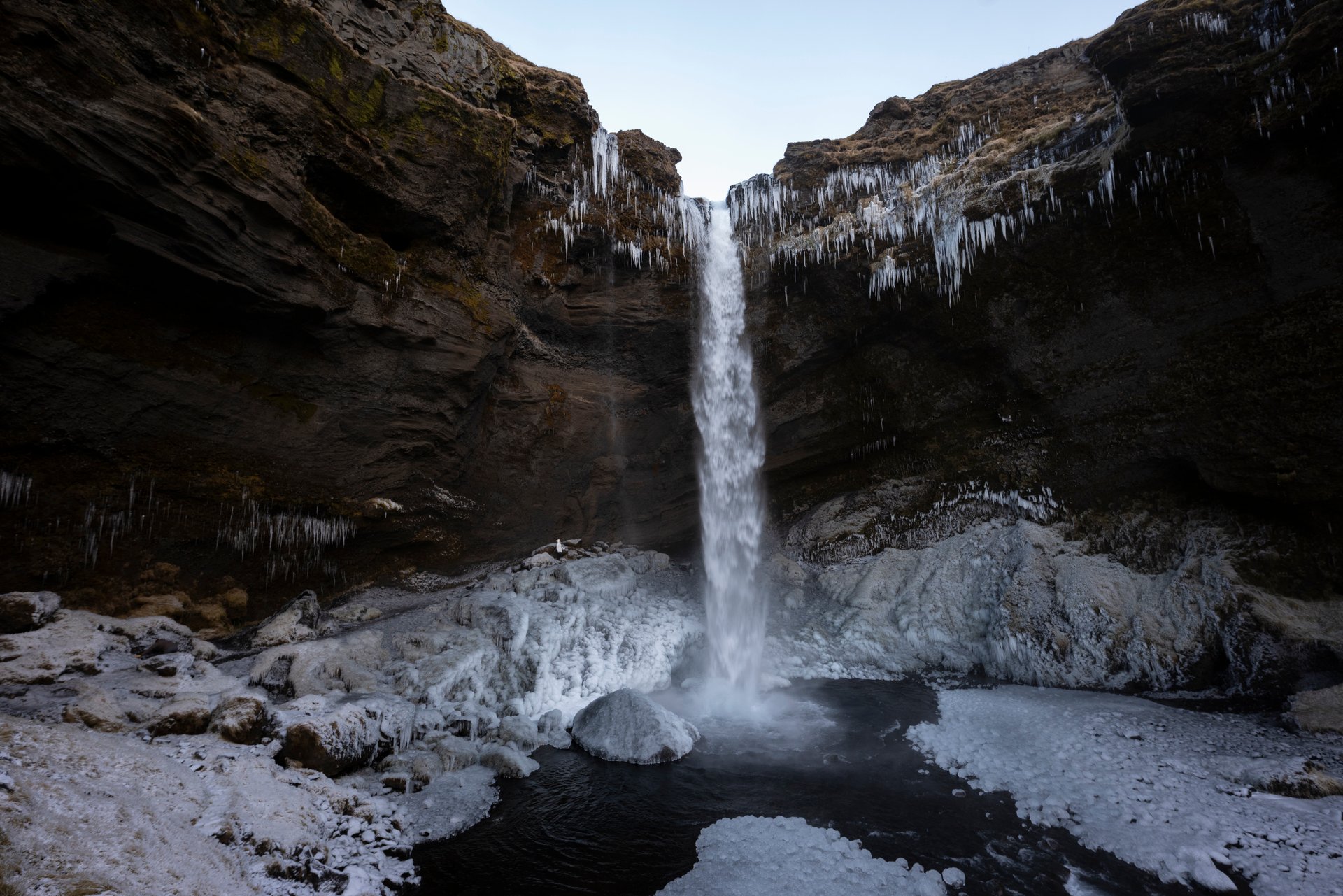
Kvernufoss is the waterfall that sits just behind the Skógar Museum, a five-minute drive from one of the most visited waterfalls in Iceland — and yet most people never see it. That’s a shame, because in many ways it’s more beautiful than its famous neighbor.
The trail follows a stream through a small gorge, and when the waterfall appears, you can walk behind it. Unlike Seljalandsfoss, where walking behind the curtain is a well-known (and crowded) experience, doing it at Kvernufoss feels almost private. The cave behind the falls is deeper, the light plays differently through the water, and the silence — relative to Skógafoss’s roar just over the hill — makes the whole thing feel like a secret.
This is exactly the kind of stop that a local guide adds to your South Coast day — the one you wouldn’t find on your own.
#20 — Bjarnafoss
Where: Snæfellsnes Peninsula How to visit: Private Snæfellsnes Tour
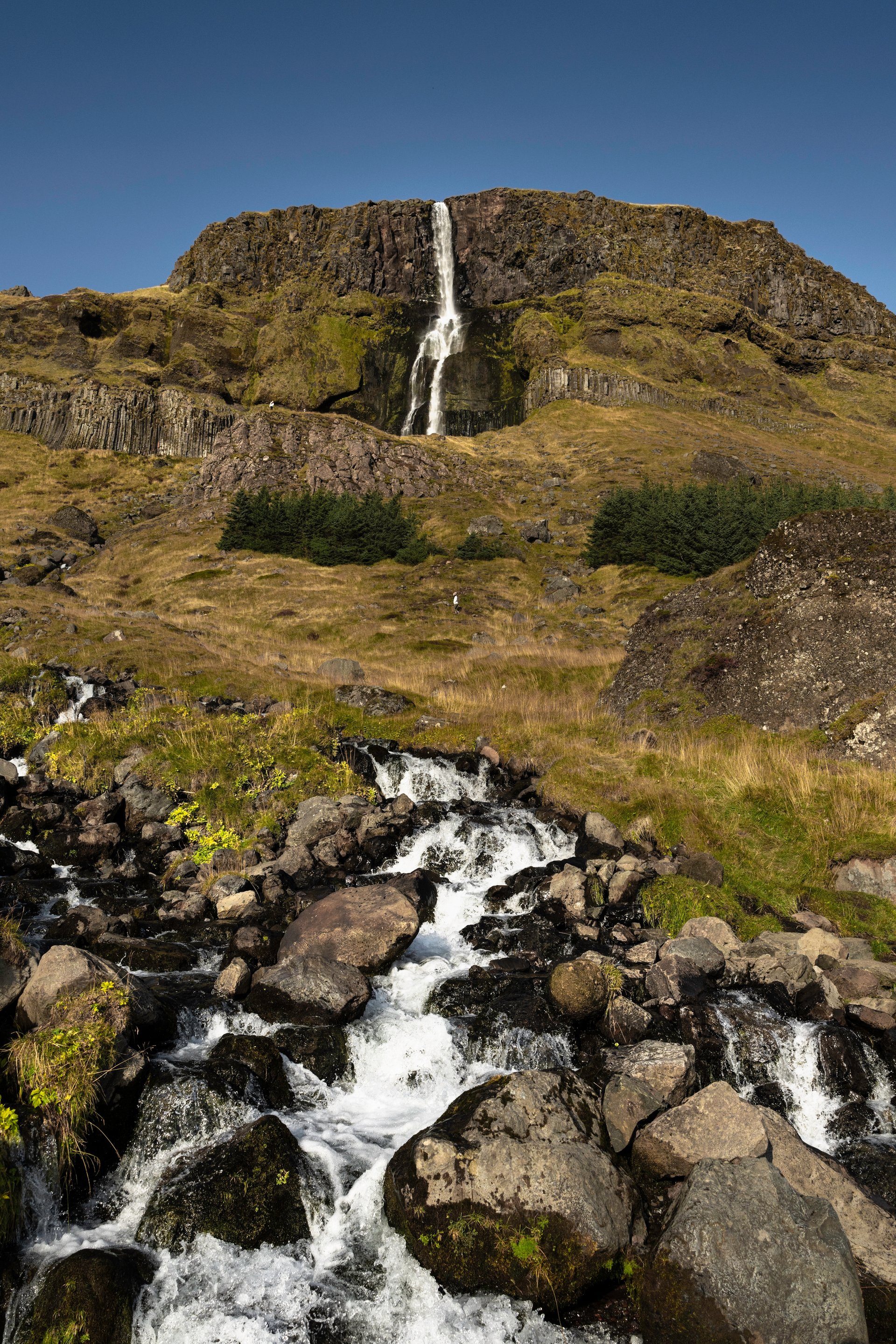
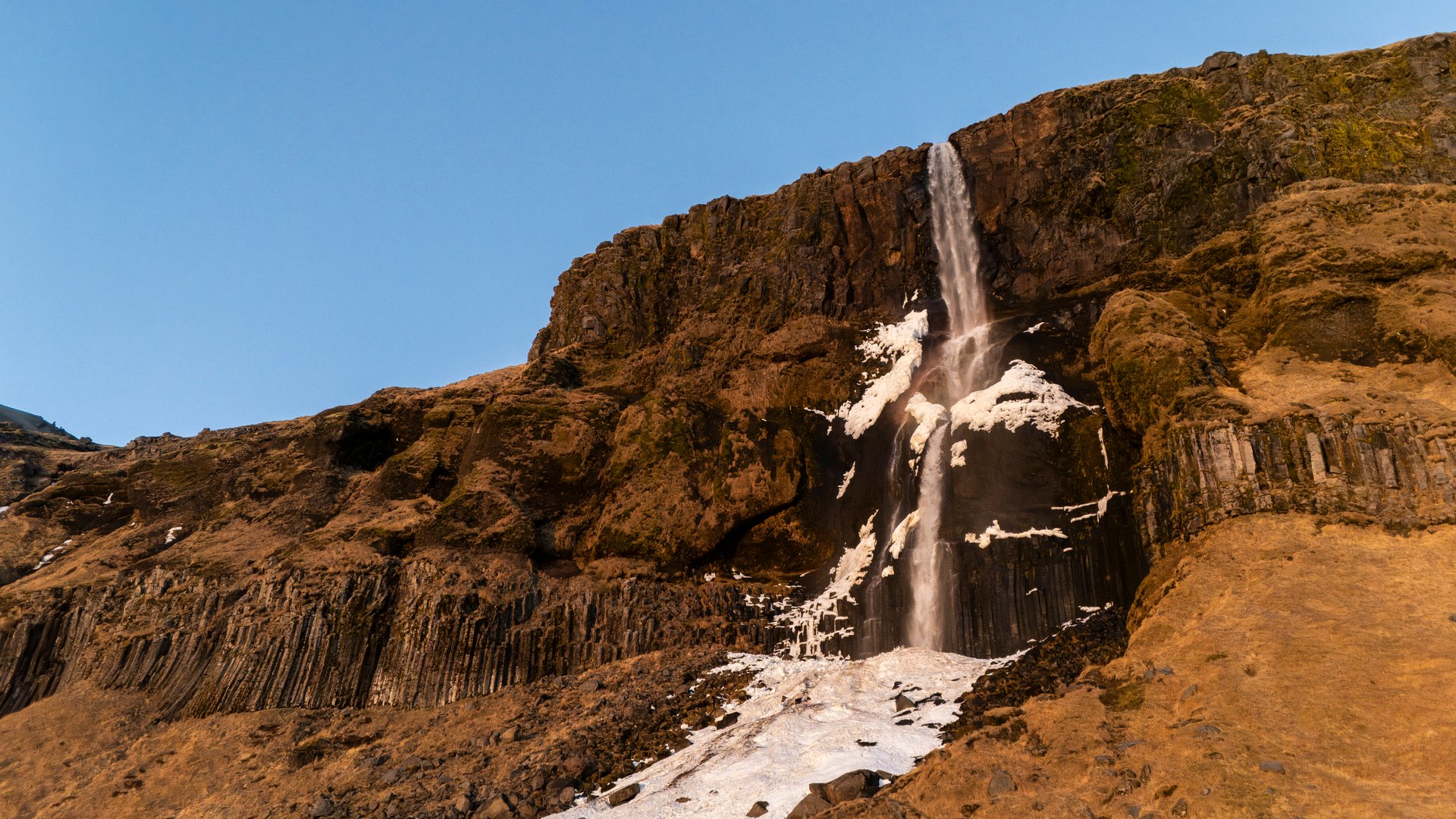
Bjarnafoss is a slender, dramatic cascade that drops from the cliffs above the village of Búðir on the south coast of Snæfellsnes. It’s visible from the road, which means most people slow down, take a photo through the window, and keep driving.
That’s a mistake. Up close, the waterfall is striking — a thin white line against dark basalt cliffs, framed by the open Atlantic behind you. The setting is what elevates it: the black church at Búðir is nearby, the Snæfellsjökull glacier looms to the west, and the whole coastline has an atmosphere that’s hard to find elsewhere in Iceland.
We sometimes include Bjarnafoss on our Snæfellsnes tours — it pairs beautifully with a stop at Búðakirkja and the lava fields around Búðahraun.
#19 — Skógafoss
Where: South Coast of Iceland How to visit: South Coast Discovery · 2-Day South Coast · South Coast & Glacier Hike
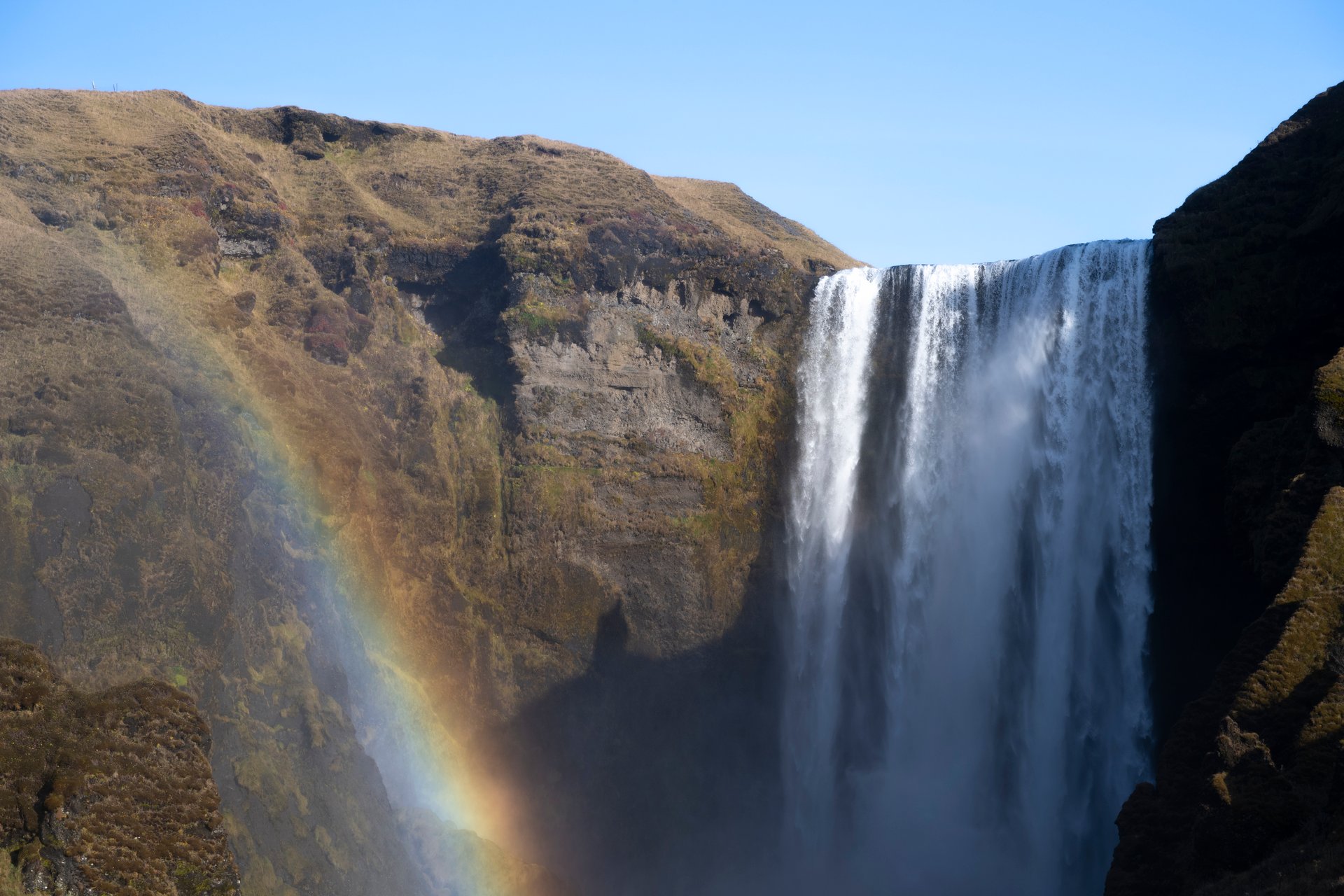
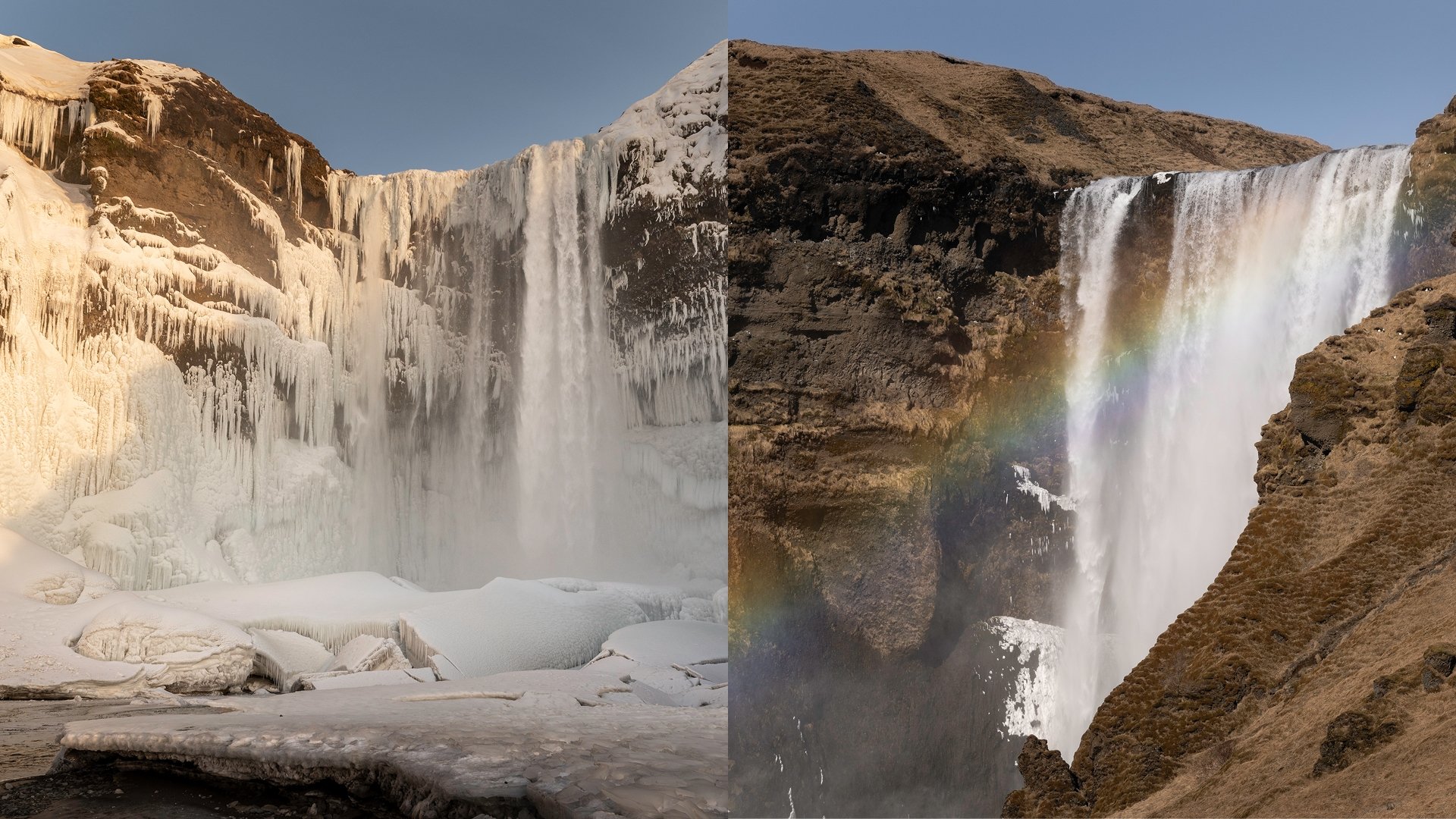
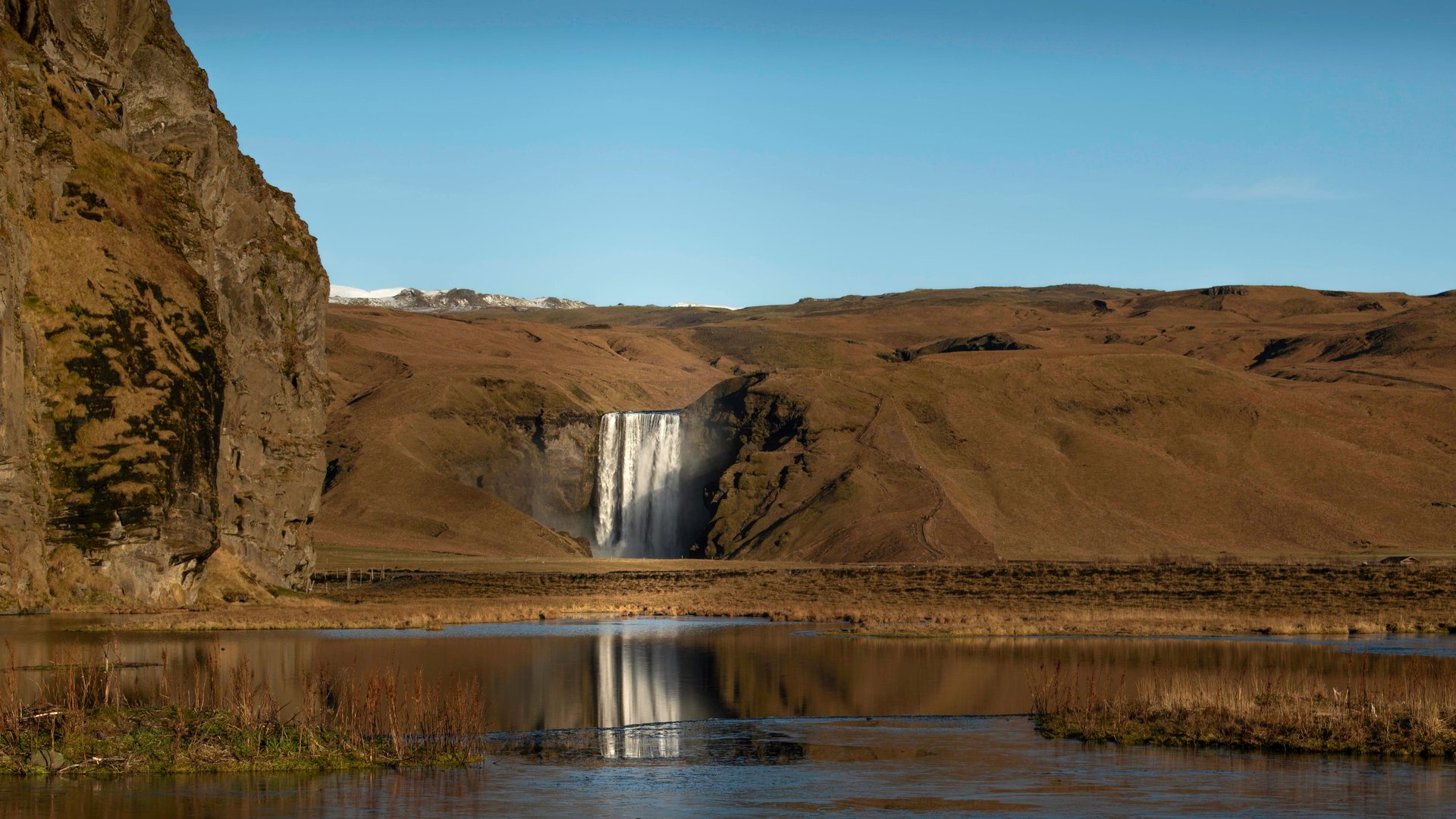
Skógafoss needs no introduction. Sixty meters tall, twenty-five meters wide, and producing enough spray on a sunny day to generate rainbows that appear to arc right out of the cliff. It’s one of the most photographed waterfalls in Iceland for good reason.
The viewing area at the base is easy — flat, accessible, and right next to the parking lot. But the real experience is climbing the staircase on the eastern side to the top. From up there, you look down into the falls and out over the black sand coastline stretching south toward the ocean. On a clear day, you can see the Westman Islands.
Yes, Skógafoss gets busy. That’s why timing matters. Early morning or late afternoon in summer gives you the falls with manageable crowds and the best light for those rainbows. It’s a standard stop on every South Coast tour we run — and even after hundreds of visits, the first sight of it still hits.
#18 — Ófærufoss
Where: Highlands, Eldgjá canyon How to visit: Custom highlands expedition
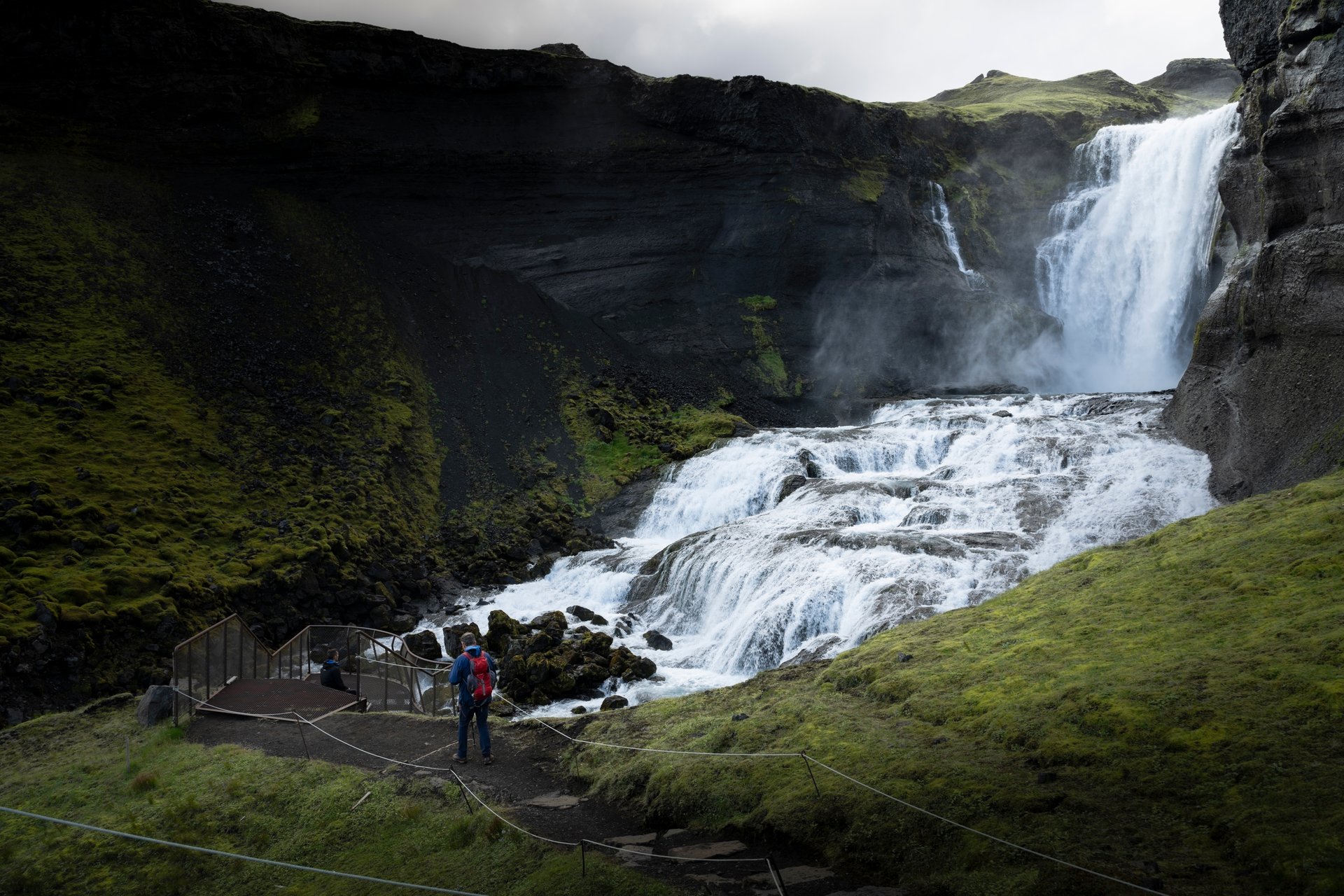
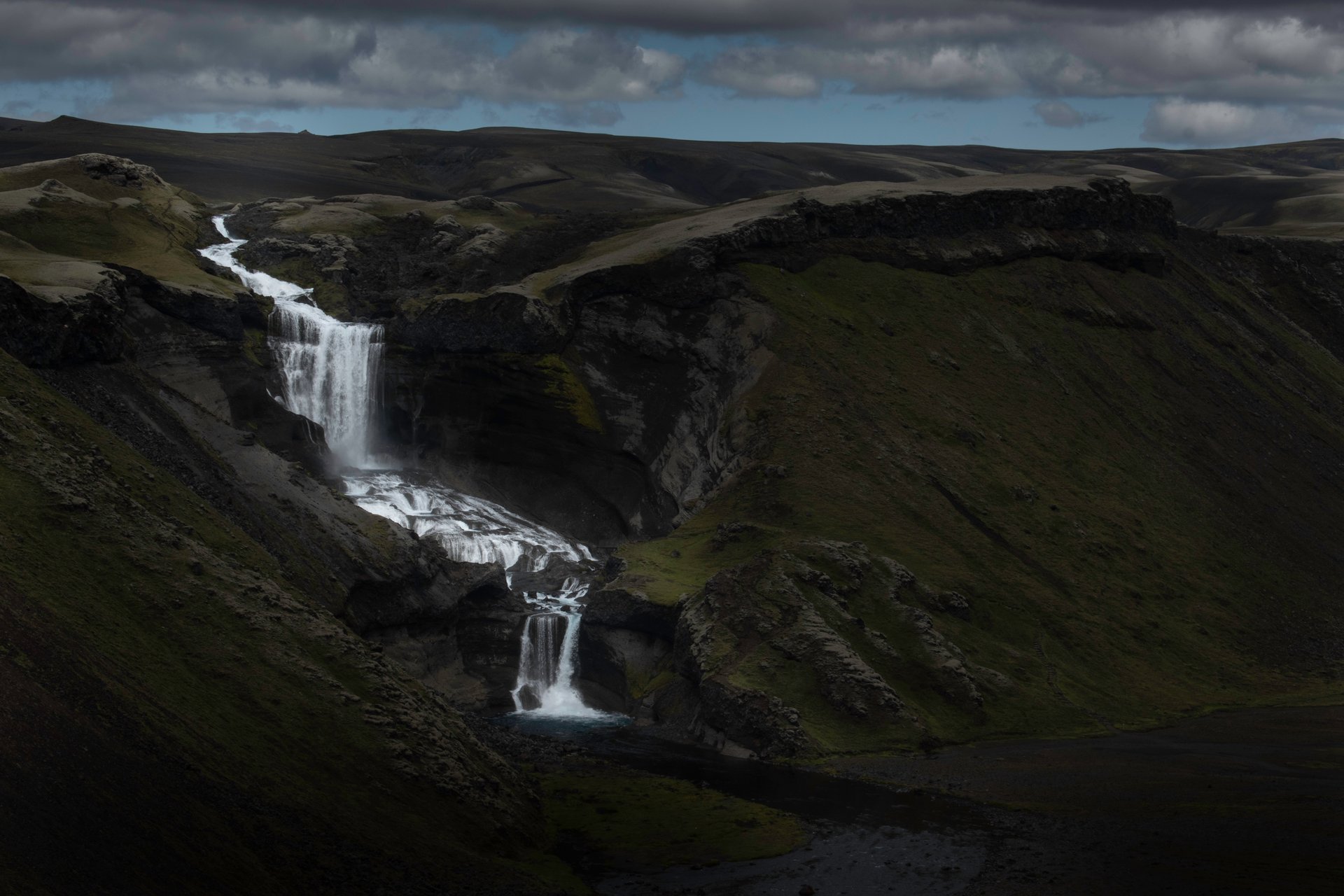
Ófærufoss is a two-tiered cascade dropping into the massive Eldgjá canyon, the largest volcanic fissure on Earth.
Getting here means driving deep into the highlands on F-roads, past the turn-off to Landmannalaugar, into a landscape that grows increasingly raw and empty. The hike from the parking area follows the canyon floor, and with each step the walls rise higher around you until Ófærufoss appears at the far end — framed perfectly by the dark canyon walls.
This is deep highlands territory — summer access only, serious 4x4 required, and virtually no other visitors. If you want to see a waterfall that feels like it belongs to you alone, Ófærufoss is as close as it gets.
#17 — Seljalandsfoss
Where: South Coast of Iceland How to visit: South Coast Discovery · 2-Day South Coast · South Coast & Glacier Hike
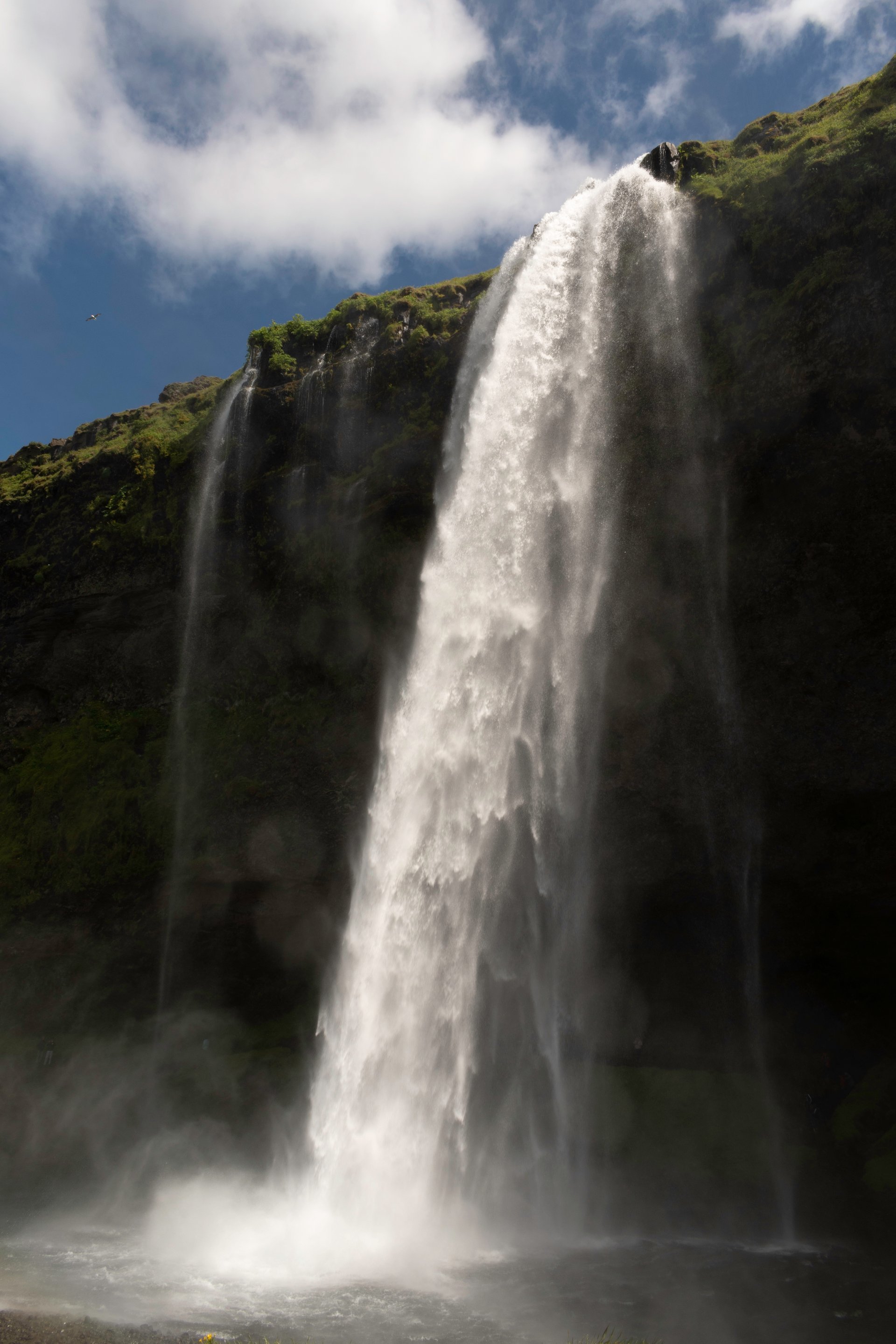
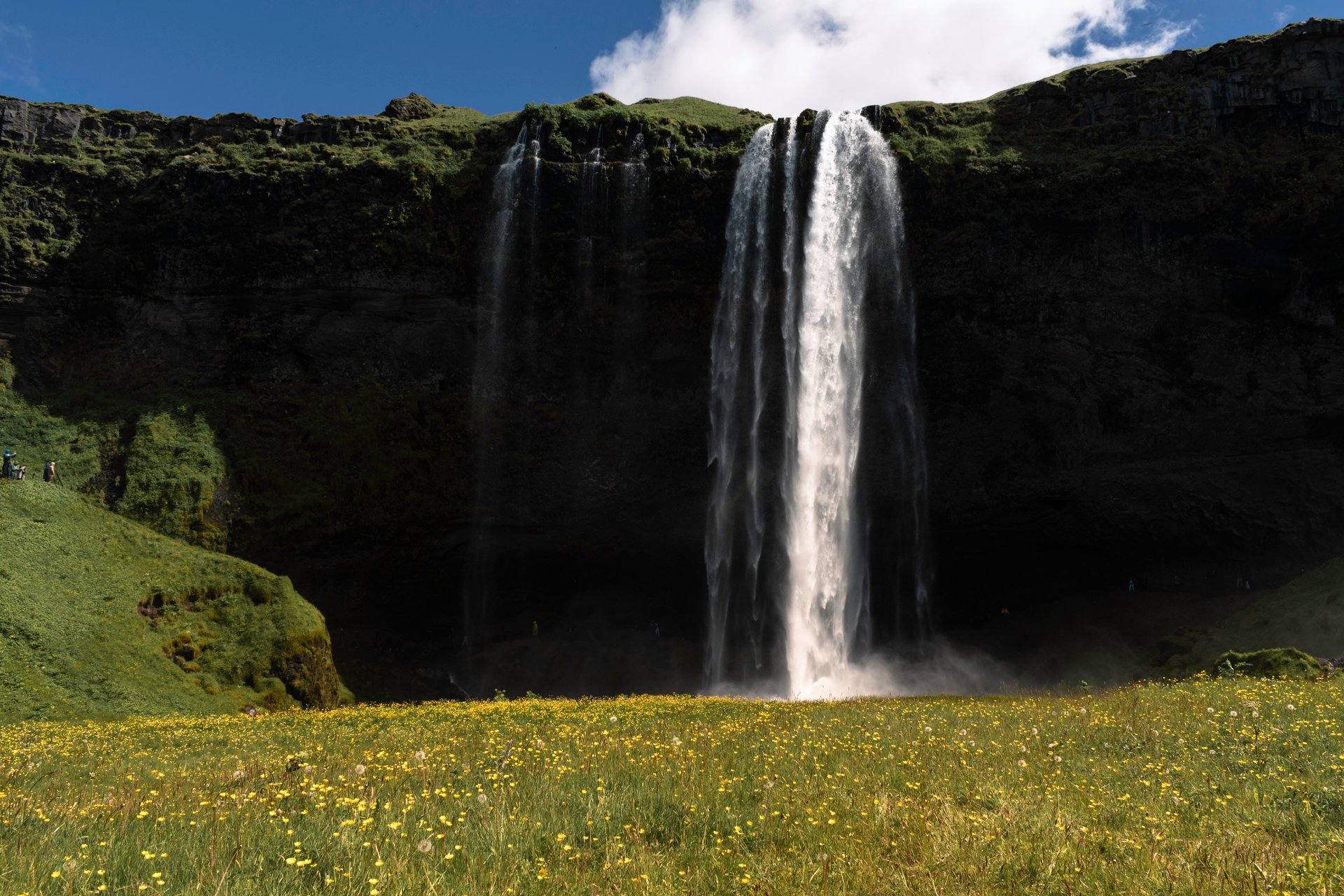
Seljalandsfoss is the one you’ve seen on every Iceland poster — a 60-meter cascade that you can walk behind. It’s a legitimate icon, and the experience of standing in the cave behind the water curtain, looking out through the falls at the green farmland beyond, is something that lives up to the hype.
You will get wet — there’s no avoiding it. Bring a waterproof layer or accept your fate.
What most visitors skip is Gljúfrabúi, the hidden waterfall just a few hundred meters south. You enter through a narrow canyon crack, wade through ankle-deep water, and emerge in a roofless cave with a waterfall pouring in from above. It’s theatrical in the best way.
#16 — Öxarárfoss
Where: Golden Circle, Þingvellir National Park How to visit: Golden Circle Farm to Table · Golden Circle Essentials
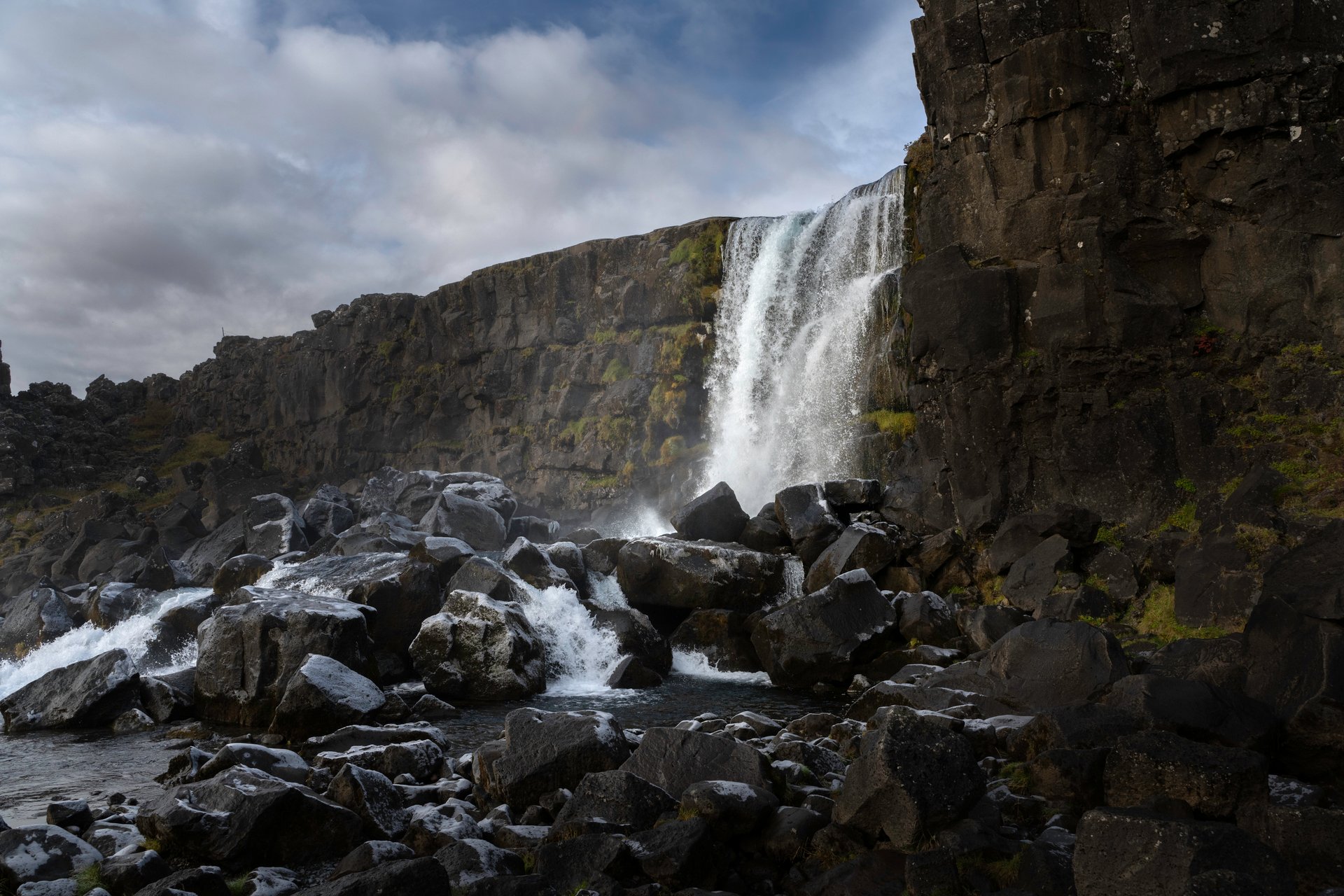
Öxarárfoss is not Iceland’s most powerful waterfall, and it won’t take your breath away with sheer scale. What it offers instead is context — and in Iceland, context is everything.
This waterfall drops from the Öxará river into the Almannagjá rift, the exact point where the North American and Eurasian tectonic plates are pulling apart. You’re standing in one of the most geologically significant places on Earth, and the waterfall is pouring into the gap between two continents.
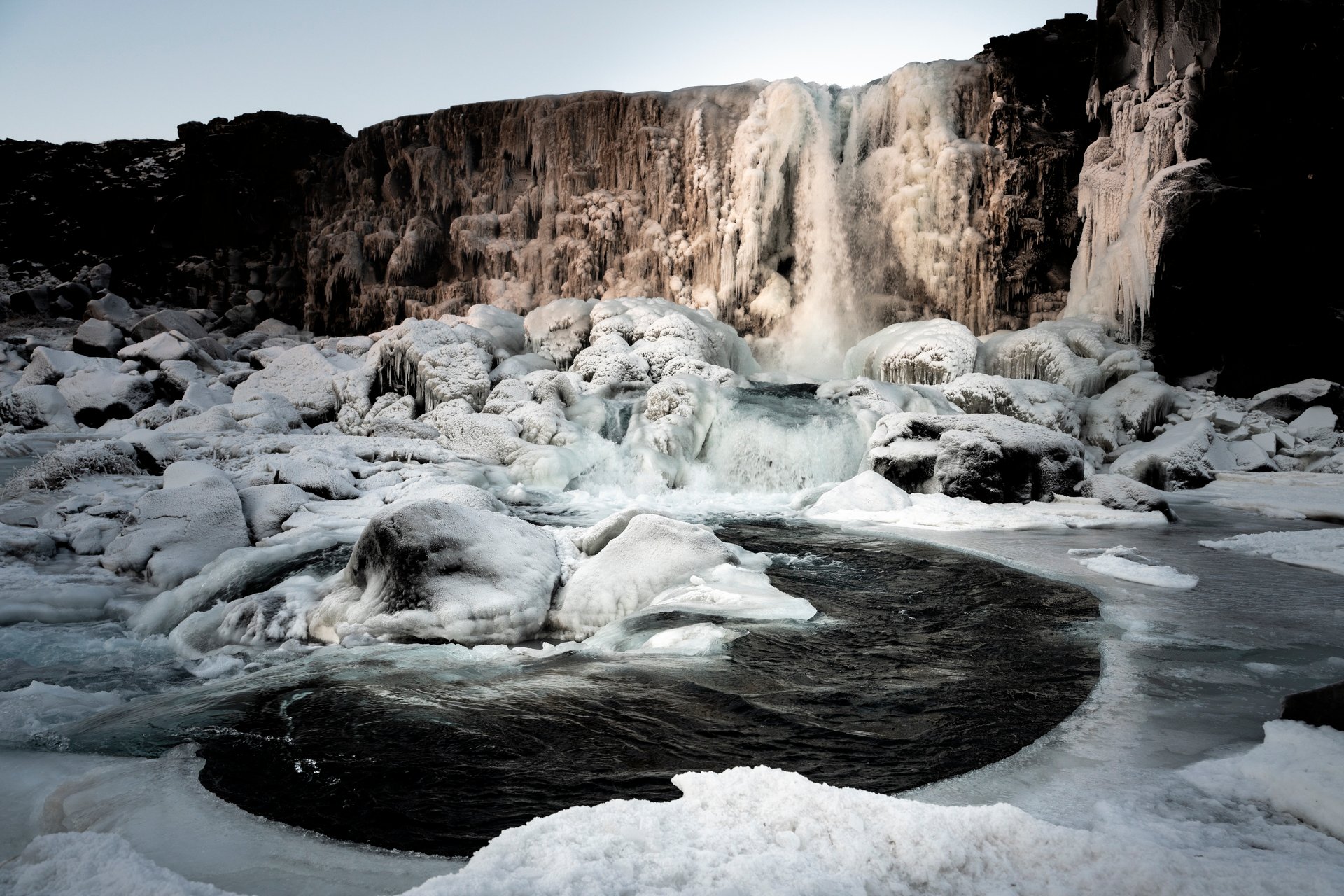
In winter, Öxarárfoss freezes partially or completely, and the ice formations against the dark rift walls are stunning. In summer, the surrounding birch and moss make it one of the most photogenic spots in Þingvellir National Park.
On our Golden Circle tours, we always include the walk down into Almannagjá — and Öxarárfoss is the reward at the end of that path.
#15 — Svartifoss
Where: South Coast, Skaftafell (Vatnajökull National Park) How to visit: 2-Day South Coast · Ring Road 7 Days · Ring Road & Highlands 10 Days
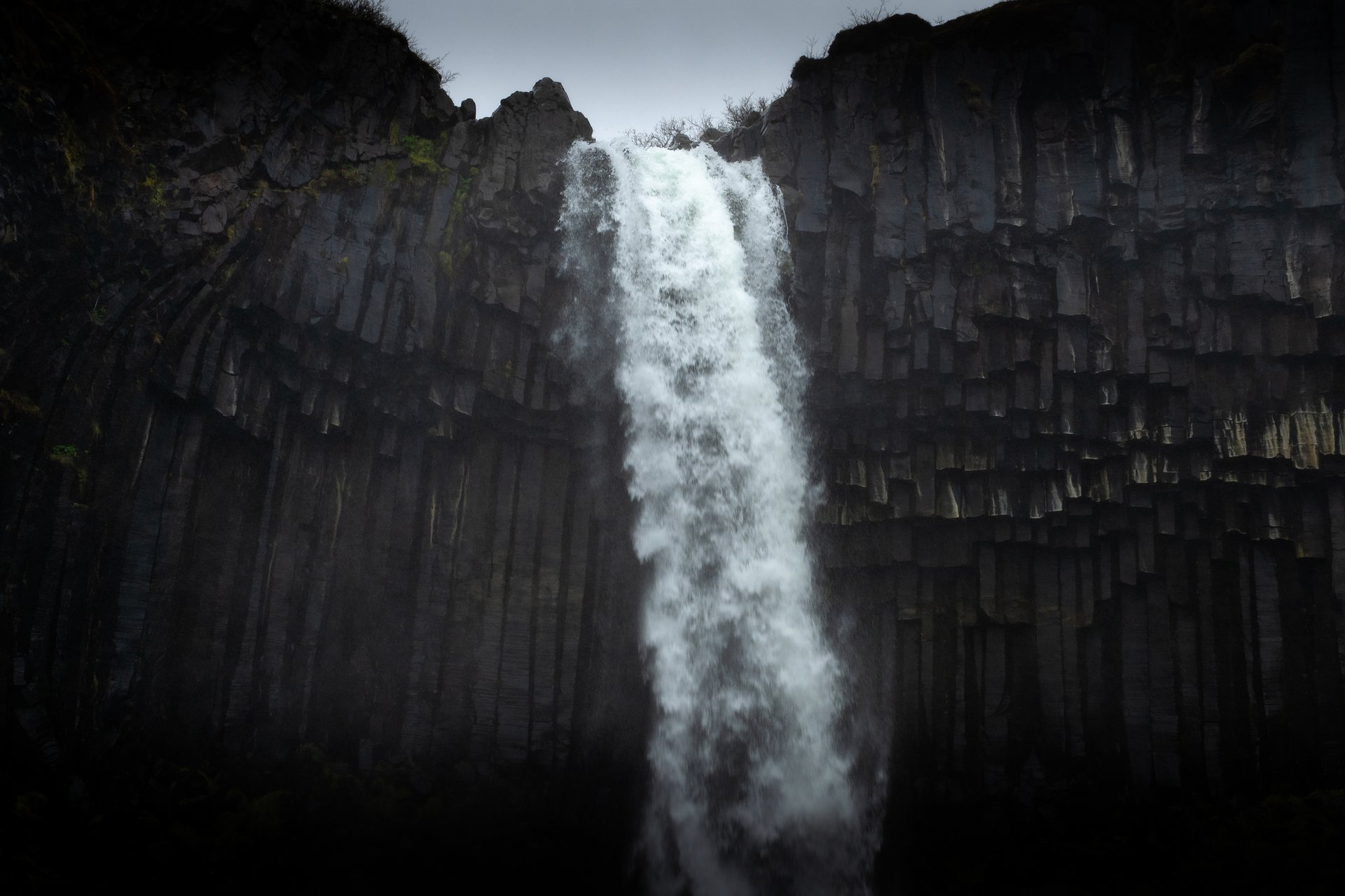
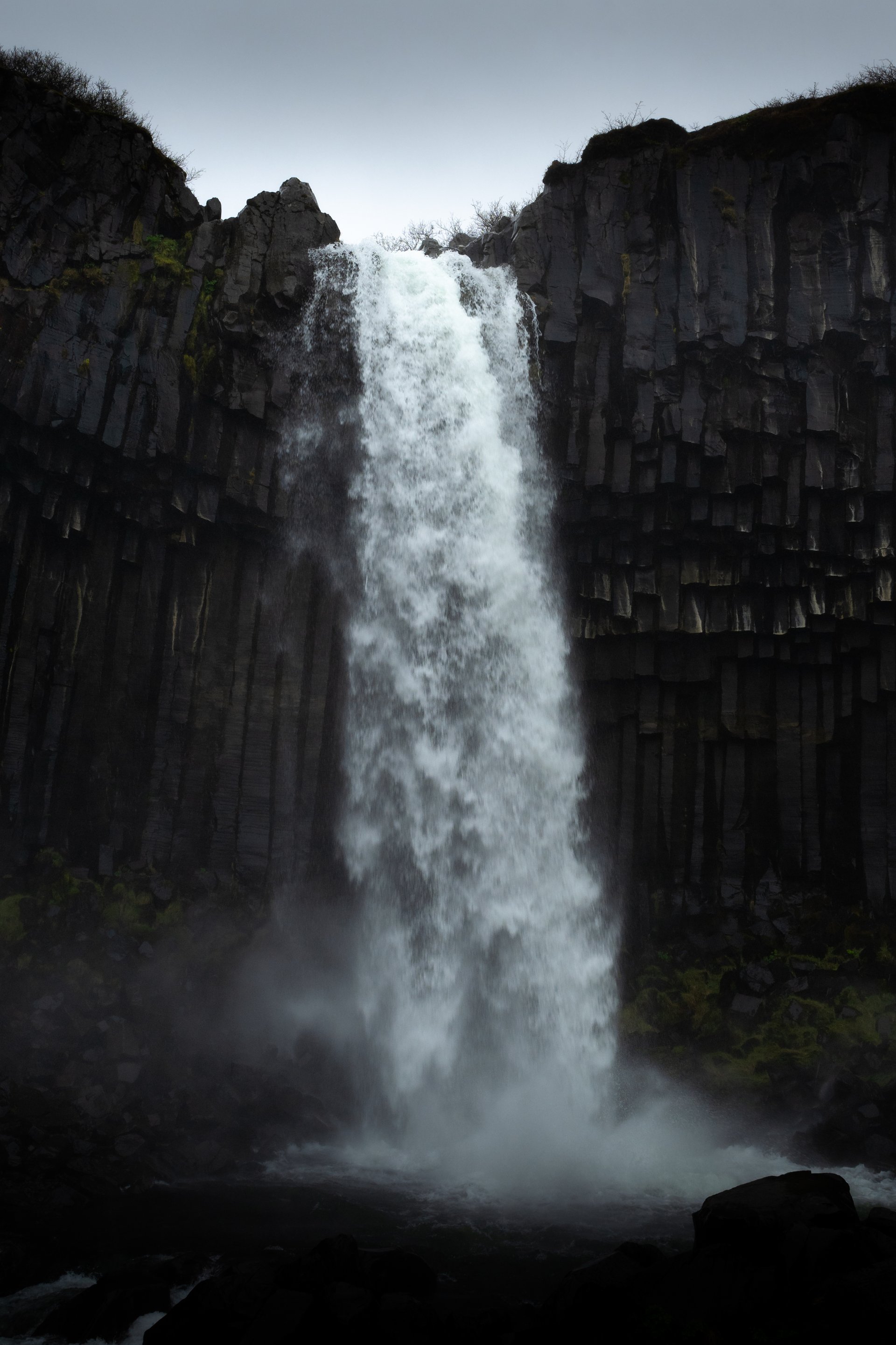
Svartifoss — “Black Falls” — is framed by hexagonal basalt columns that hang over the edge like the pipes of a dark organ. It’s the waterfall that inspired the design of Hallgrímskirkja, Reykjavík’s iconic church, and once you see it, the connection is unmistakable.
Getting there requires a 1.5 km hike from the Skaftafell visitor center — easy terrain, well-marked, with views of Vatnajökull glacier along the way. The hike itself passes two smaller waterfalls (Hundafoss and Magnúsarfoss) that are worth pausing for.
Svartifoss isn’t about power — it’s about architecture. Nature built something here that looks designed, and the contrast of the white water against the jet-black columns, surrounded by green moss in summer, is one of the most visually striking compositions in the country.
#14 — Dettifoss
Where: North Iceland, Vatnajökull National Park How to visit: Ring Road 7 Days · Ring Road & Highlands 10 Days (summer)
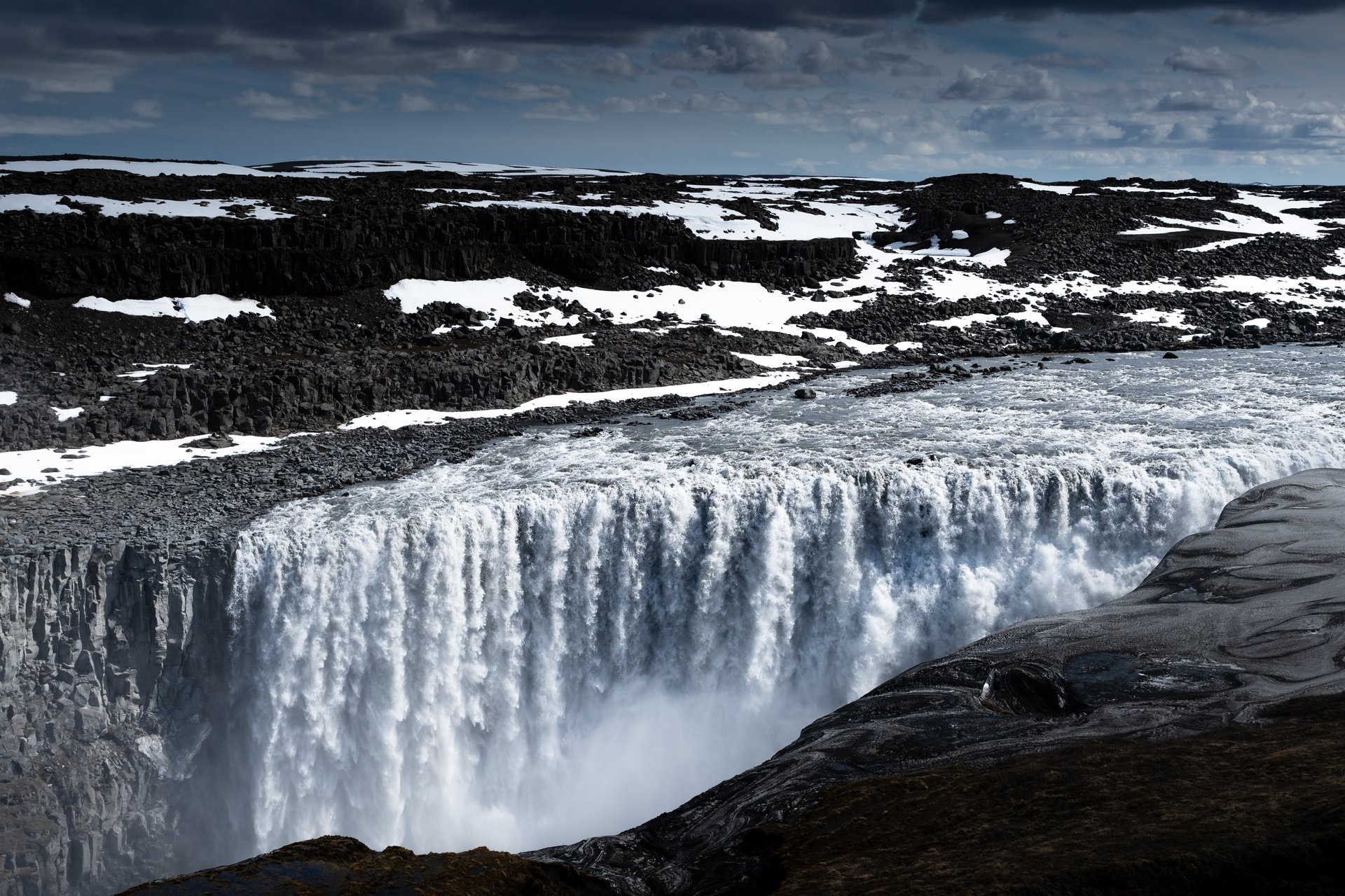
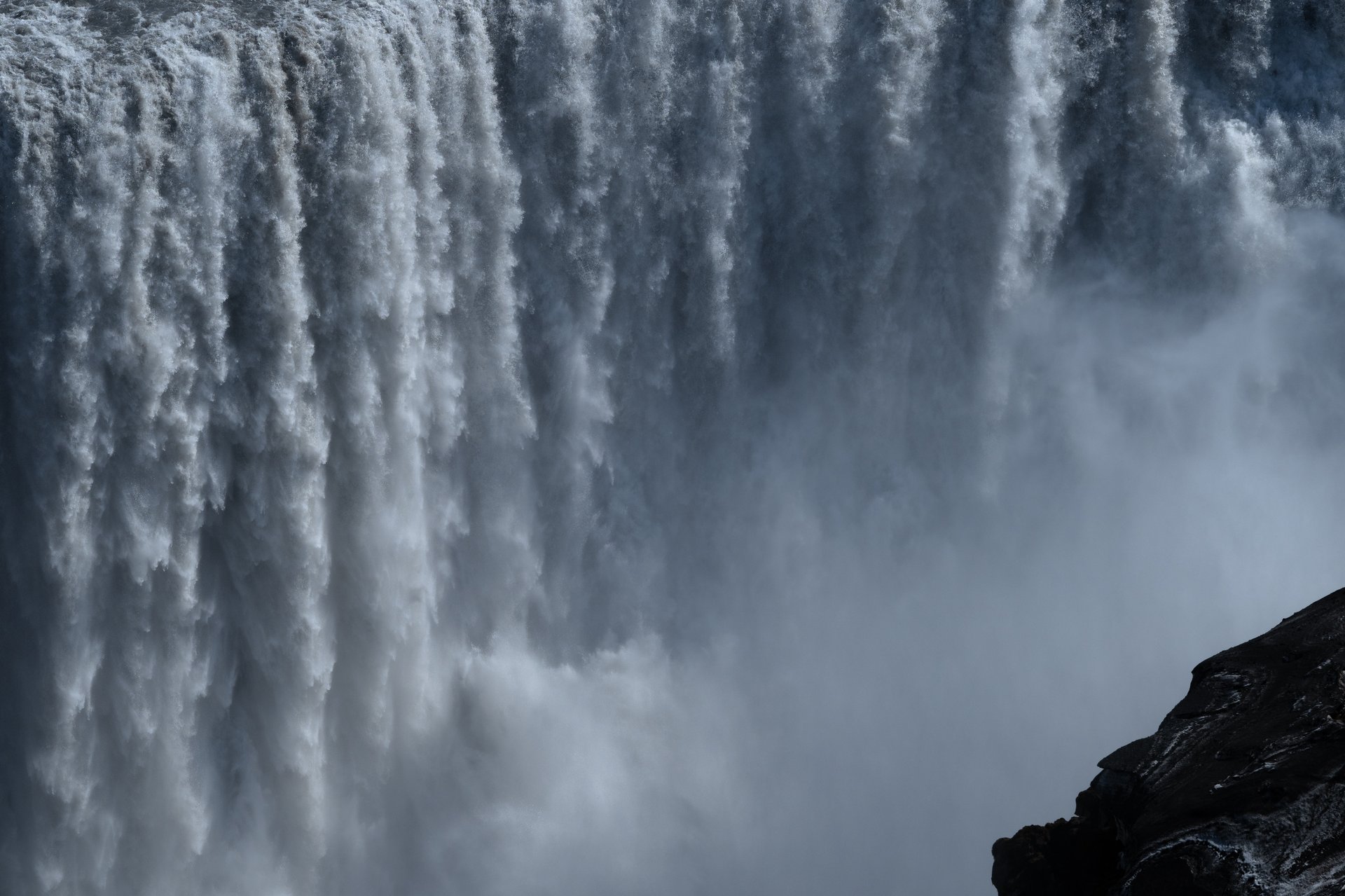
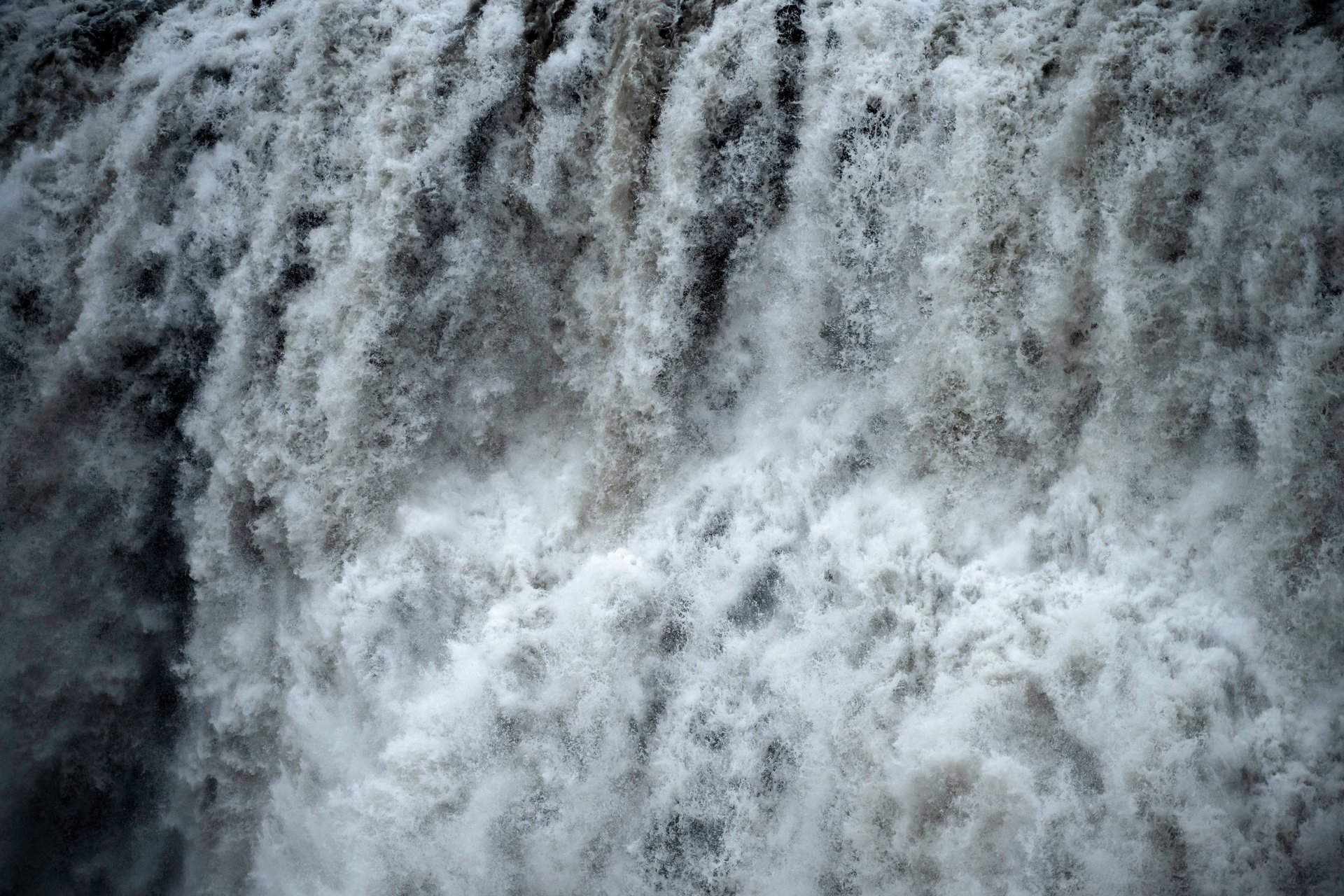
Dettifoss is Europe’s most powerful waterfall. That’s not marketing — that’s hydrology. The Jökulsá á Fjöllum river, fed by the Vatnajökull ice cap, throws an estimated 193 cubic meters of water per second over a 44-meter drop. The ground shakes. The spray rises in a cloud visible from kilometers away.
There are two sides to access Dettifoss. The east side (Route 864, paved) is easier and has better infrastructure. The west side (Route 862) puts you closer and at a more dramatic angle, but the road is rougher. Both are worth doing, but if you only have one shot, the east side delivers the classic view.
Dettifoss sits in a volcanic desert that already feels like another planet. The combination of the barren, grey landscape and the sheer violence of the water is something that hits differently than waterfalls surrounded by green valleys. This is Iceland at its most elemental.
#13 — Hengifoss
Where: East Iceland How to visit: Ring Road 7 Days · Ring Road & Highlands 10 Days
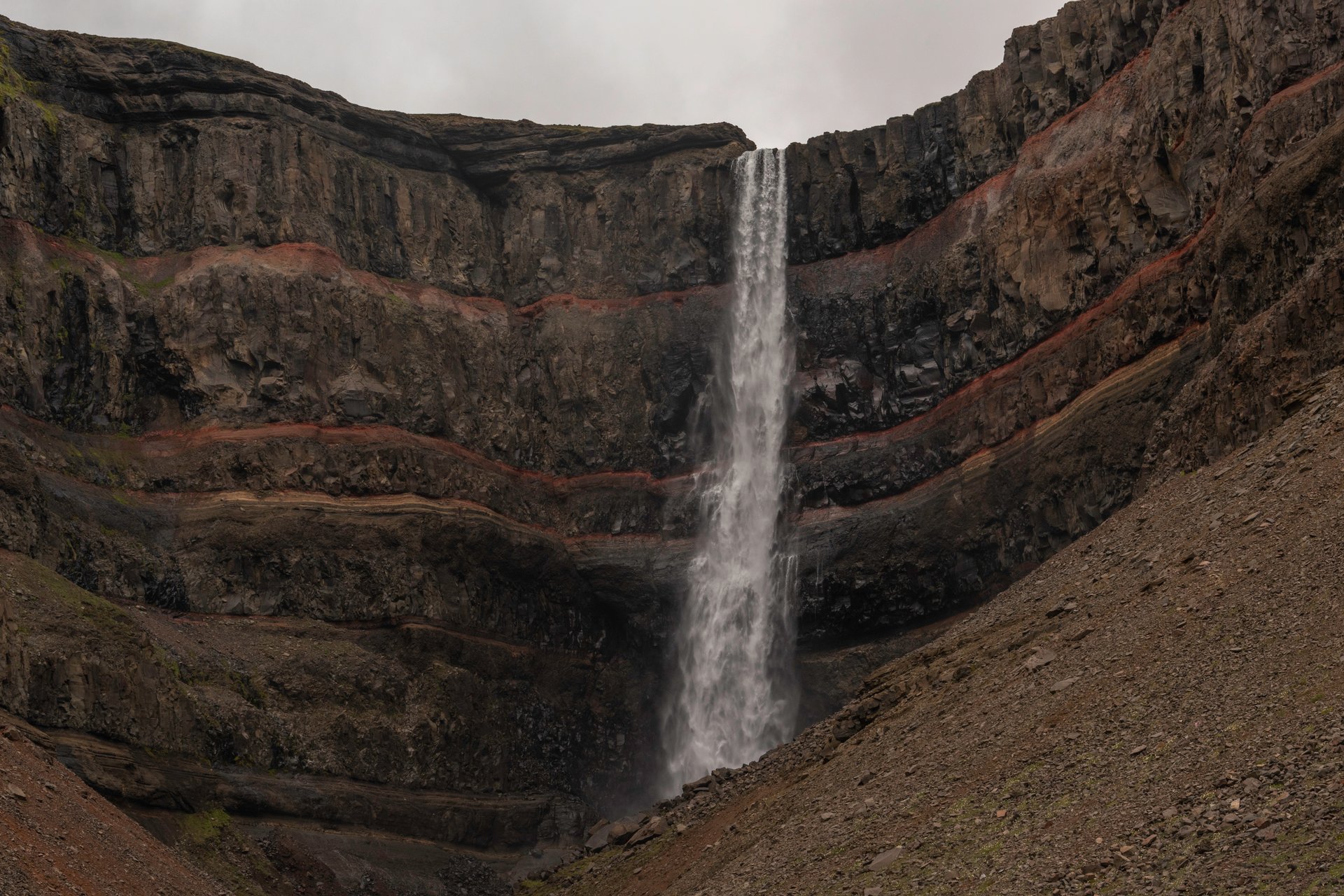
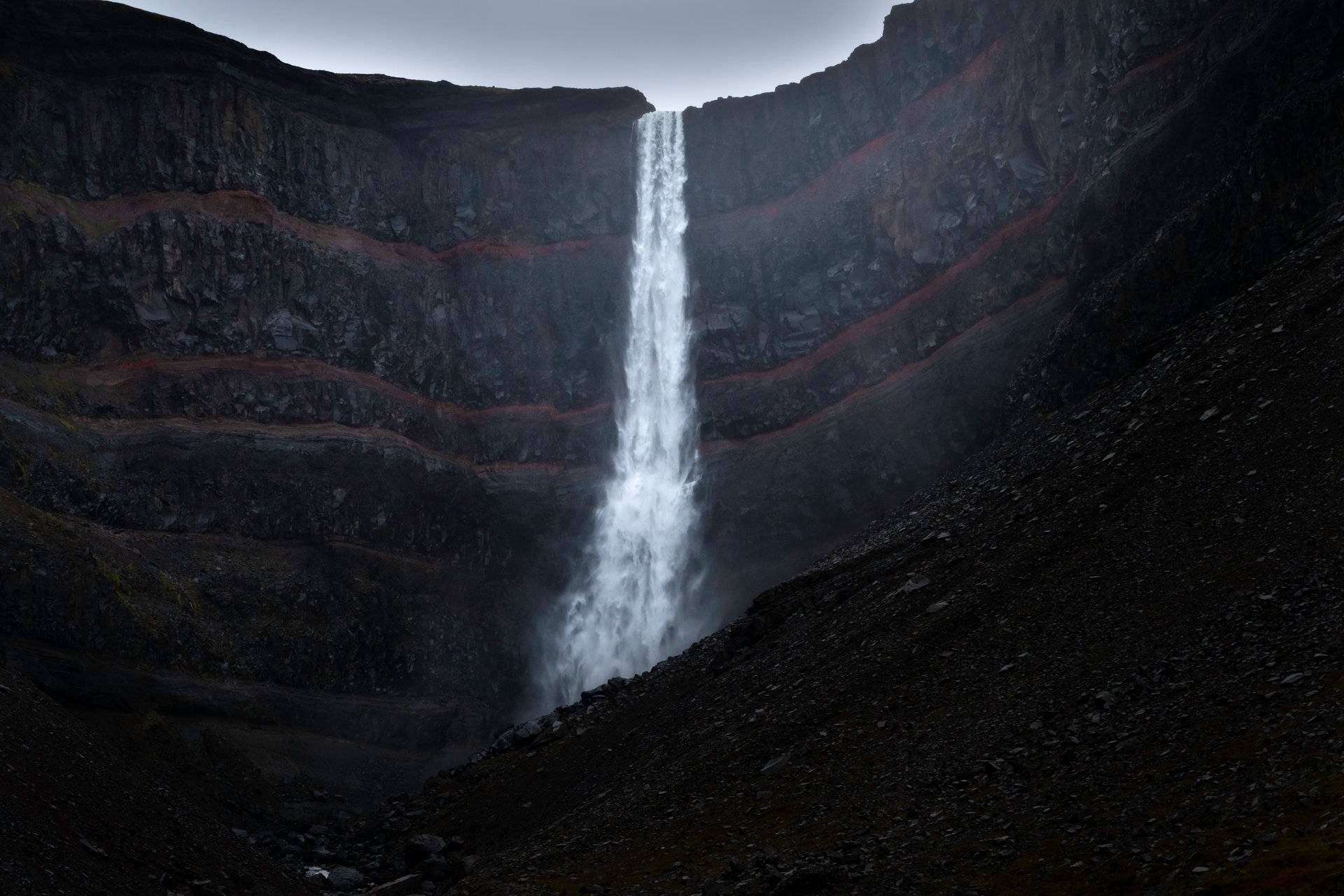
At 128 meters, Hengifoss is one of Iceland’s tallest waterfalls — but what makes it extraordinary isn’t the height. It’s the geology. The cliff face behind the falls is layered with alternating bands of red clay and dark basalt, each layer representing a different era of volcanic activity. You’re looking at millions of years of geological history, painted across the rock in horizontal stripes.
The hike to Hengifoss takes about 40 minutes each way from the parking area near Lagarfljót lake. Along the way, you pass Litlanesfoss, a smaller waterfall flanked by perfect basalt columns — almost like a warm-up act that would steal the show anywhere else.
East Iceland is the least-visited region of the country, and Hengifoss is one of its crown jewels. If your itinerary includes the Ring Road, this detour is non-negotiable.
#12 — Hjálparfoss
Where: Þjórsárdalur Valley How to visit: Viking Heritage & Waterfalls
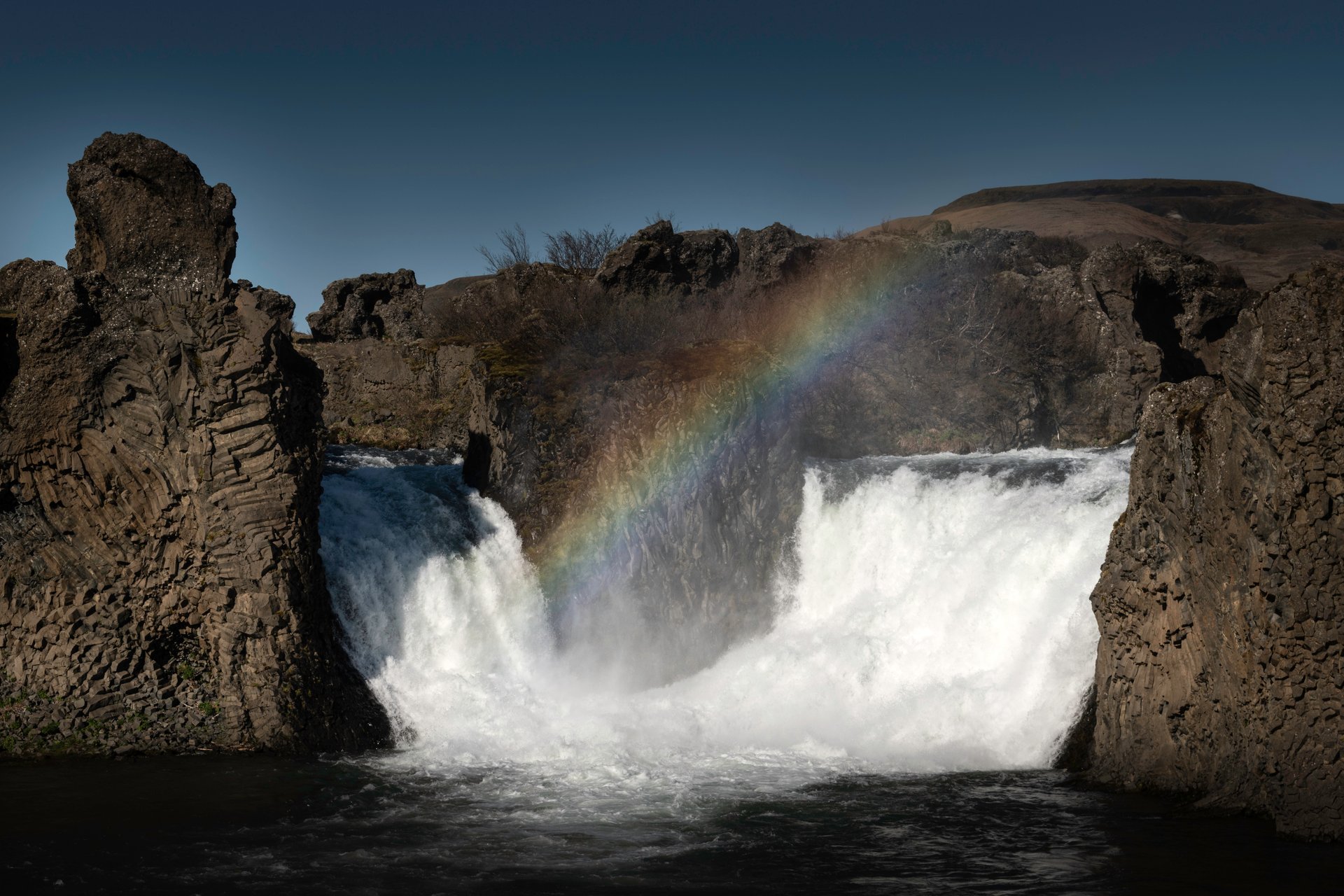
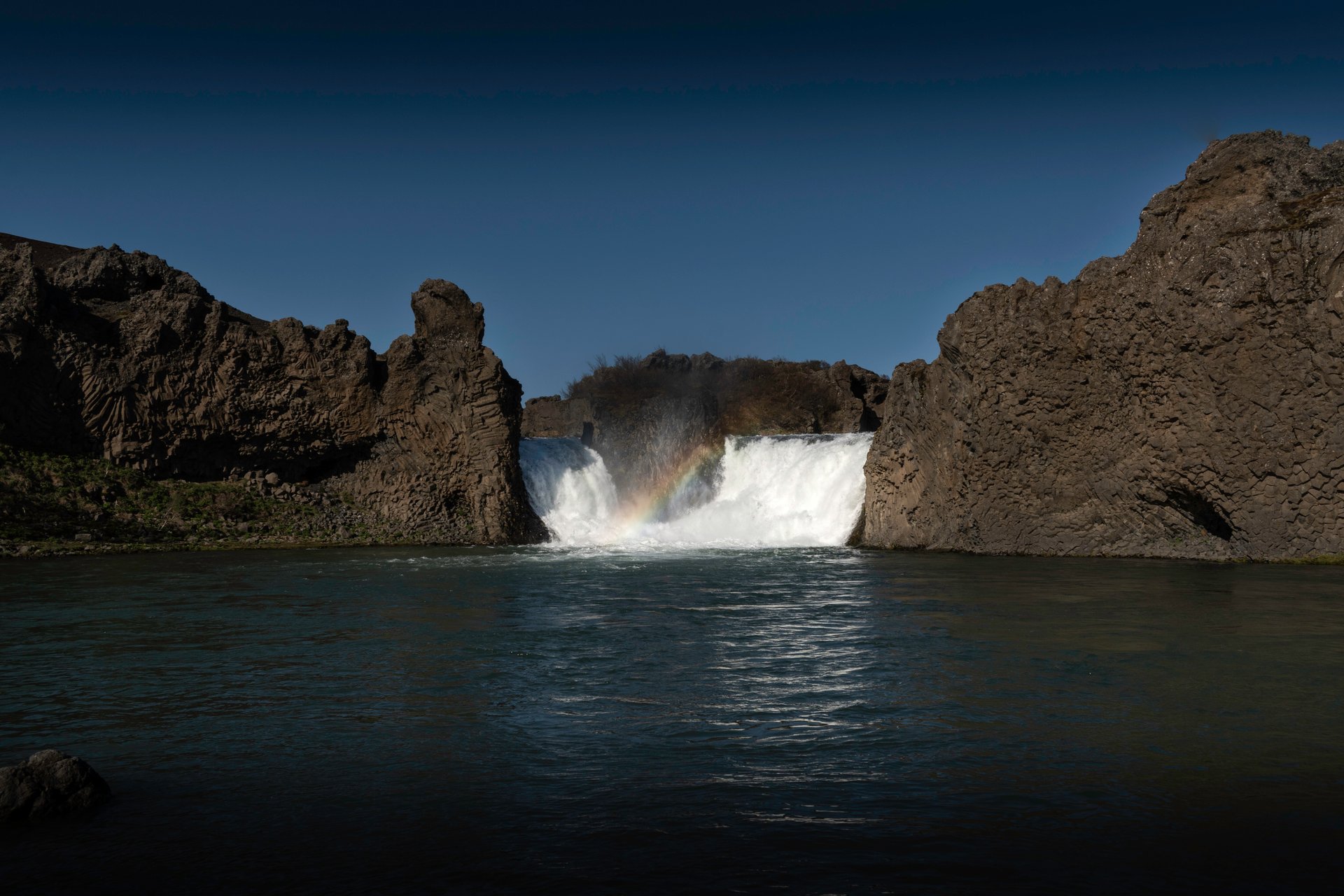
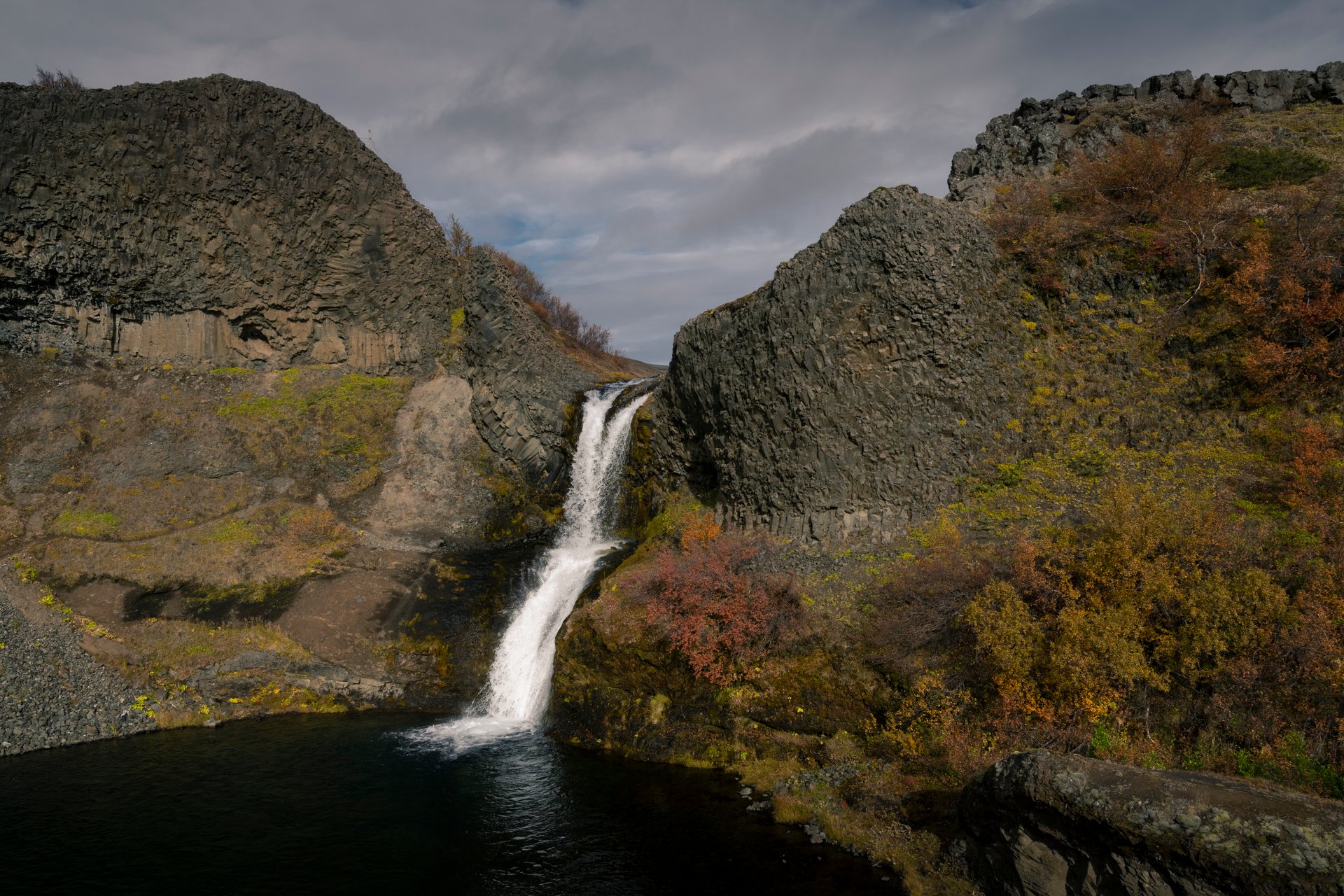
Hjálparfoss is a twin waterfall — two streams converging around a rocky island before dropping into a pool surrounded by columnar basalt. It’s photogenic from every angle, compact enough to take in fully, and almost absurdly easy to reach — a short drive off Route 32 and a two-minute walk from the car.
Hjálparfoss is one of the highlights of our Viking Heritage & Waterfalls day tour, which explores the Þjórsárdalur valley — a region packed with waterfalls, Viking history, and landscapes that most visitors to Iceland never see.
#11 — Háifoss
Where: Þjórsárdalur Valley How to visit: Viking Heritage & Waterfalls
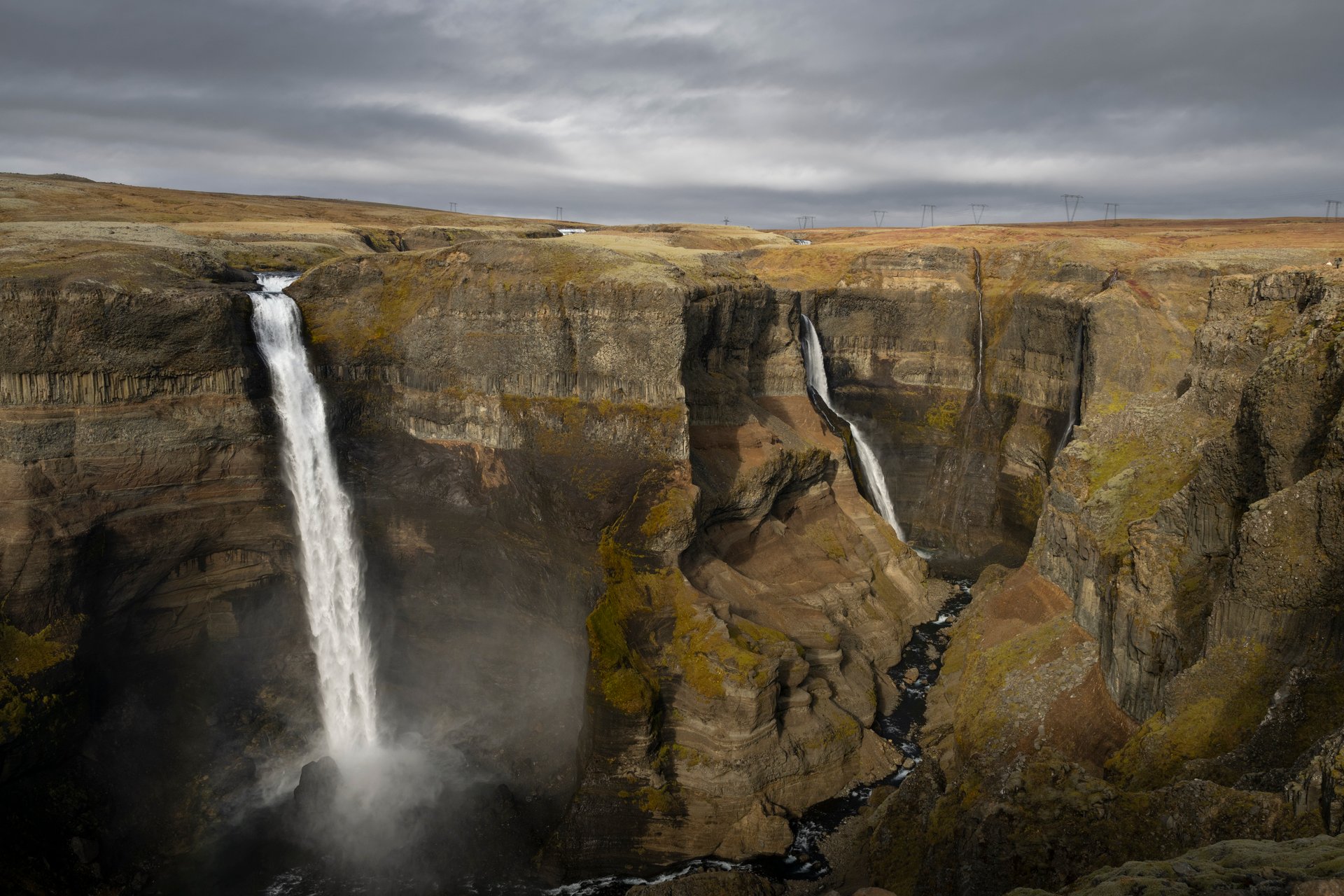
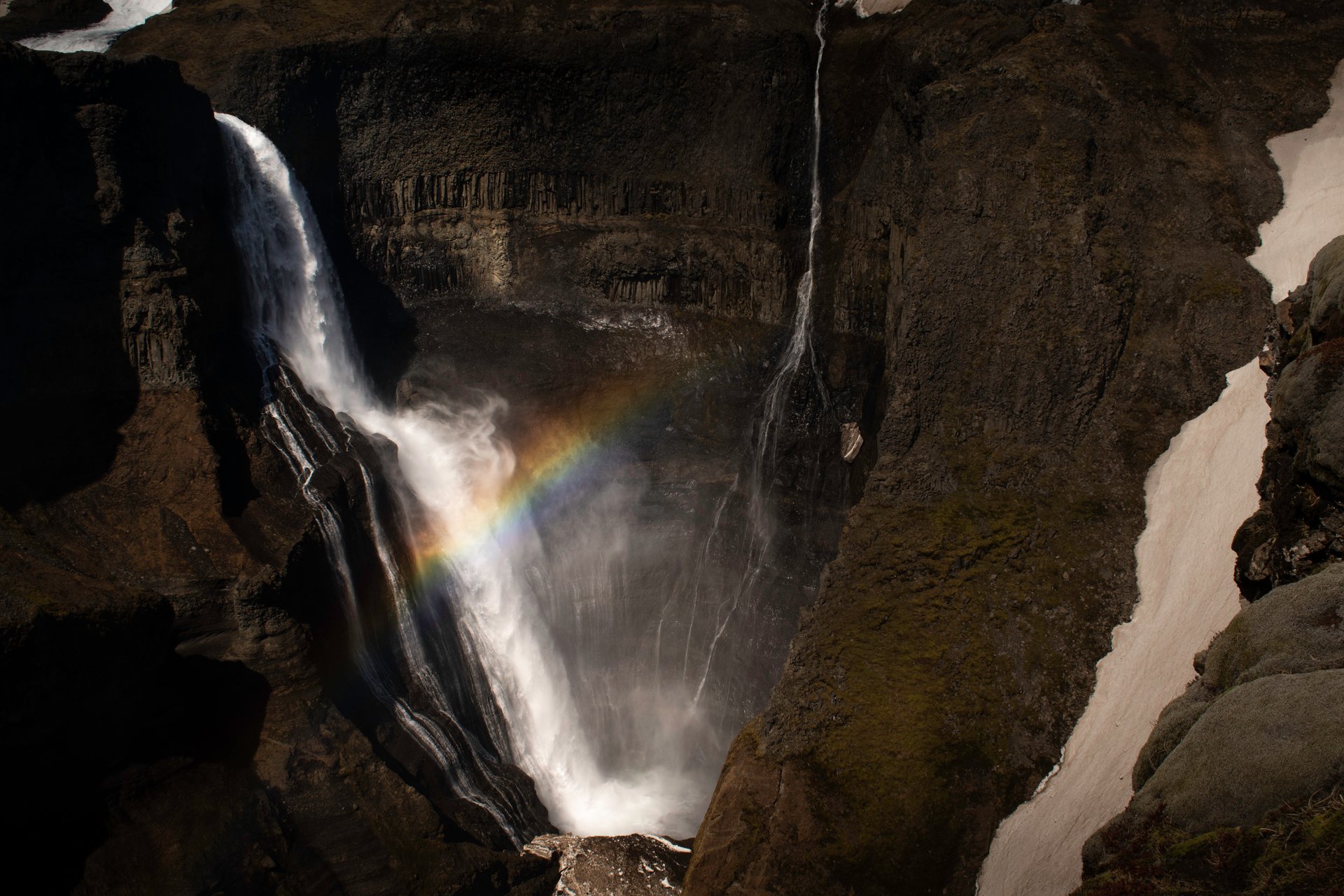
Háifoss drops 122 meters into a deep canyon carved by the Fossá river — and the first time you see it, the scale is difficult to process. It’s one of Iceland’s tallest waterfalls, and it shares the canyon with its neighbor Granni, a slightly shorter cascade that falls in parallel just meters away.
The viewpoint is reached by a gravel road (F-road status varies by season) that requires a capable vehicle and some confidence on rough terrain. From the edge of the canyon, you look straight down at both waterfalls dropping into the gorge, with the Þjórsárdalur valley stretching out behind you.
This is one of those waterfalls that separates a good Iceland trip from an exceptional one. It’s not on the standard routes, it takes effort to reach, and the reward is overwhelming. On our Viking Heritage & Waterfalls tour, Háifoss is the kind of moment that redefines what clients thought Iceland had to offer.
#10 — Gjáin
Where: Þjórsárdalur Valley How to visit: Viking Heritage & Waterfalls
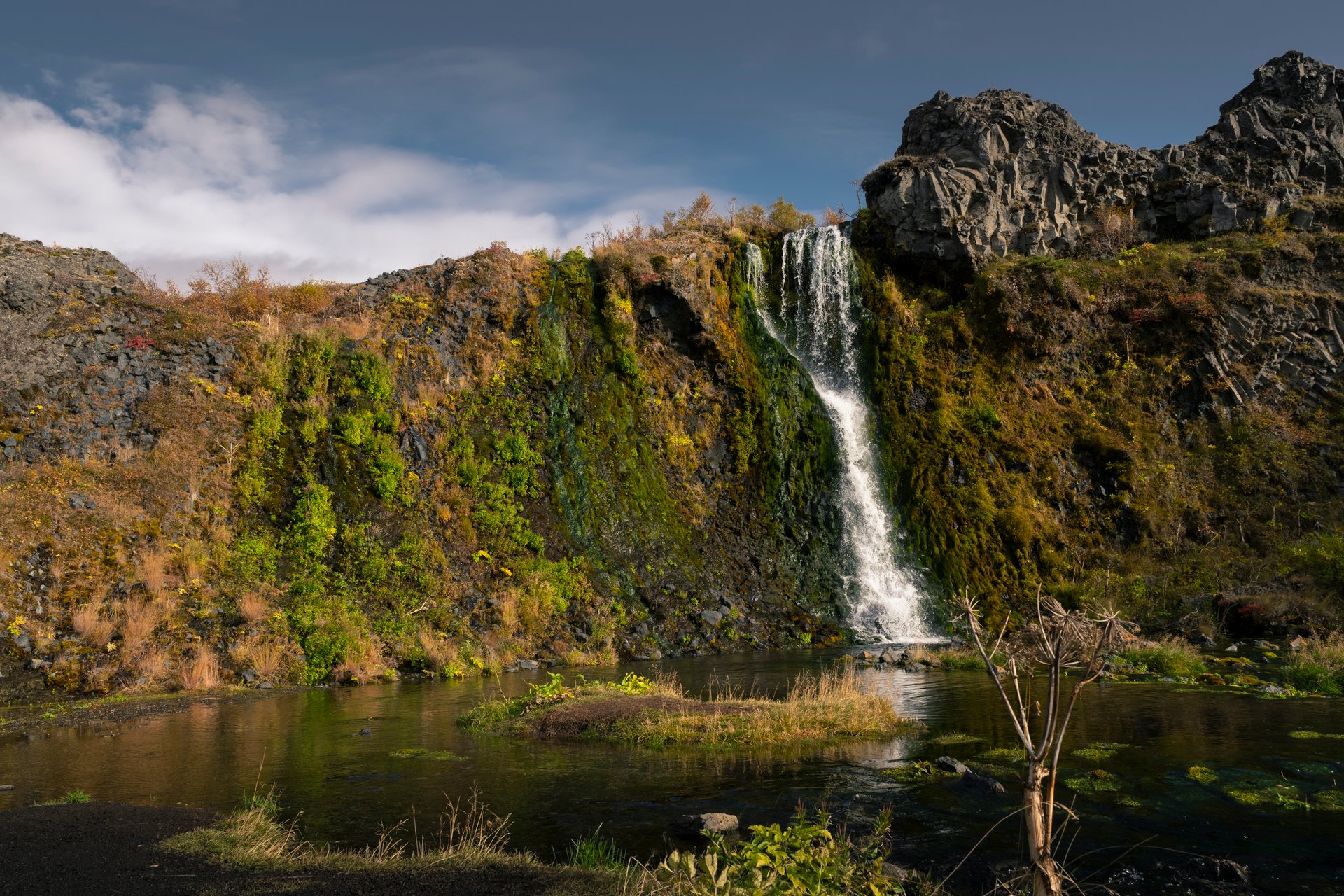
Gjáin isn’t one waterfall — it’s a collection. A moss-covered gorge where streams cascade over lava rock in every direction, pools of crystal-clear water sit between small falls, and the whole scene looks like it was designed for a fantasy film.
The access is a short but steep descent into the gorge on a rough trail. Once you’re down there, the atmosphere shifts completely — the wind disappears, the sound is all water, and the light filters green through the birch and moss.
Gjáin is the place that gets the biggest reaction on our Viking Heritage & Waterfalls tour. Clients walk down into the gorge expecting a nice waterfall and find themselves in something that feels like an entirely different world. Of all 25 waterfalls on this list, Gjáin is the one that’s hardest to capture in a photo and most rewarding to experience in person.
#9 — Hraunfossar
Where: Borgarfjörður, Silver Circle How to visit: 2-Day West Iceland
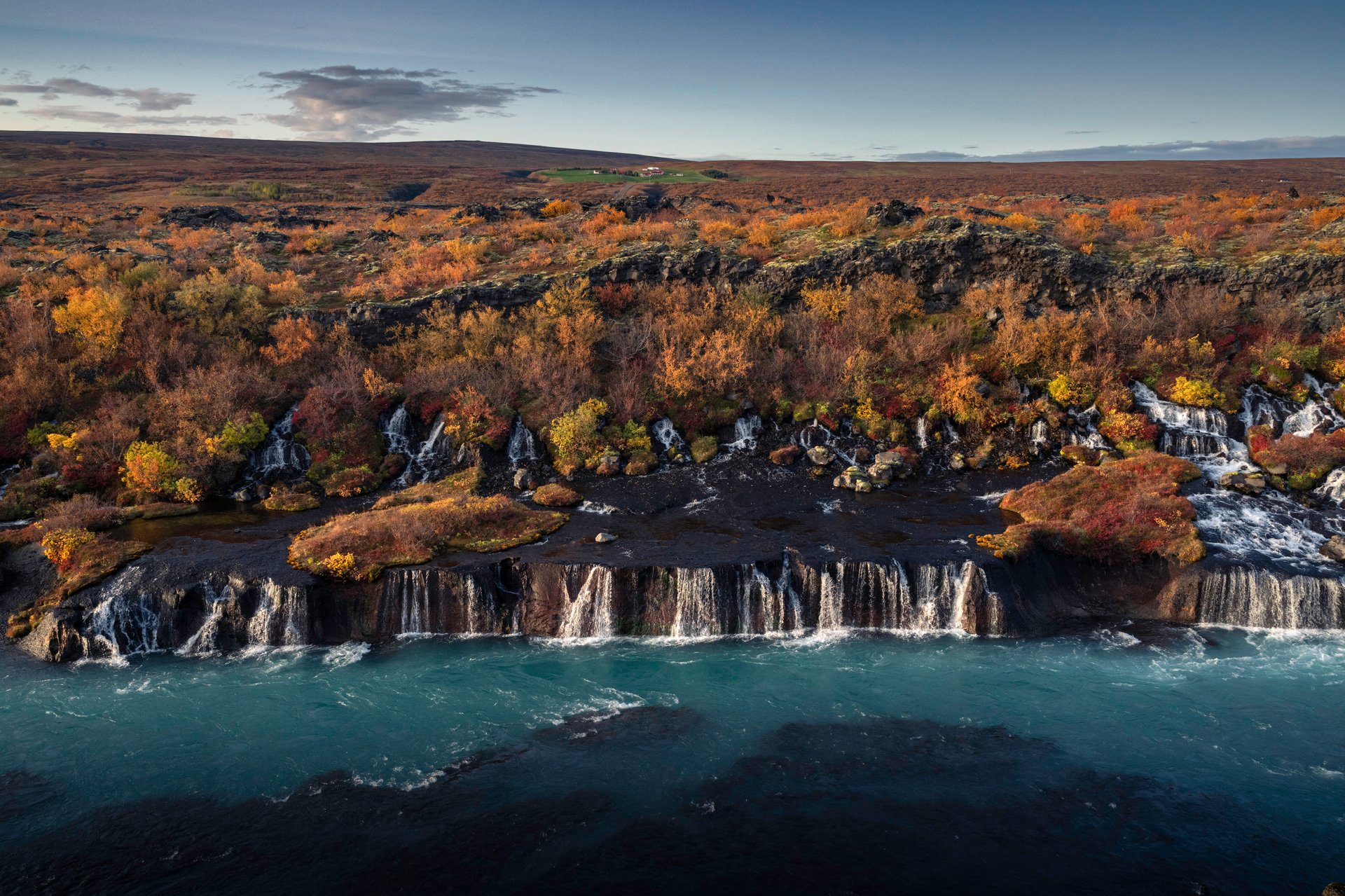
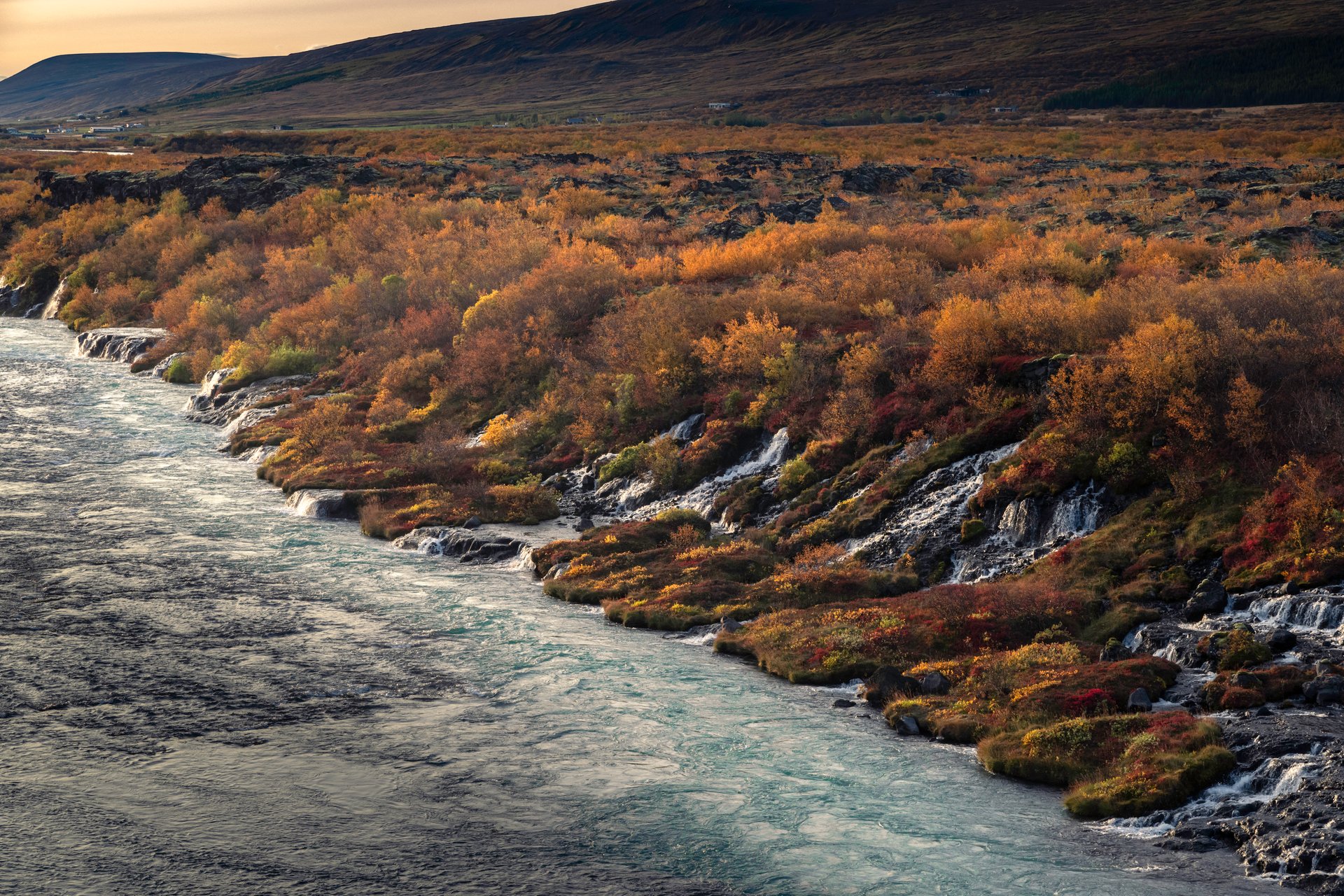
Hraunfossar isn’t a waterfall in the traditional sense. There’s no river, no drop, no single point of origin. Instead, dozens of rivulets of glacial water emerge from beneath a lava field and cascade over a long stretch of rock into the Hvítá river. The effect is surreal — water appearing from nowhere, spread across hundreds of meters of moss-covered lava.
Right next to Hraunfossar is Barnafoss, a much more violent falls where the same river is squeezed through a narrow rocky channel. The contrast between the two — gentle and serene versus focused and furious — makes the combined stop one of the most interesting waterfall visits in Iceland.
The name means “Lava Falls,” and the geological explanation is as fascinating as the visual: the water filters through the porous Hallmundarhraun lava field, traveling underground from Langjökull glacier before resurfacing here. It’s a waterfall that teaches you something about how Iceland works.
#8 — Sigöldugljúfur
Where: Highlands How to visit: Landmannalaugar Highland Paradise
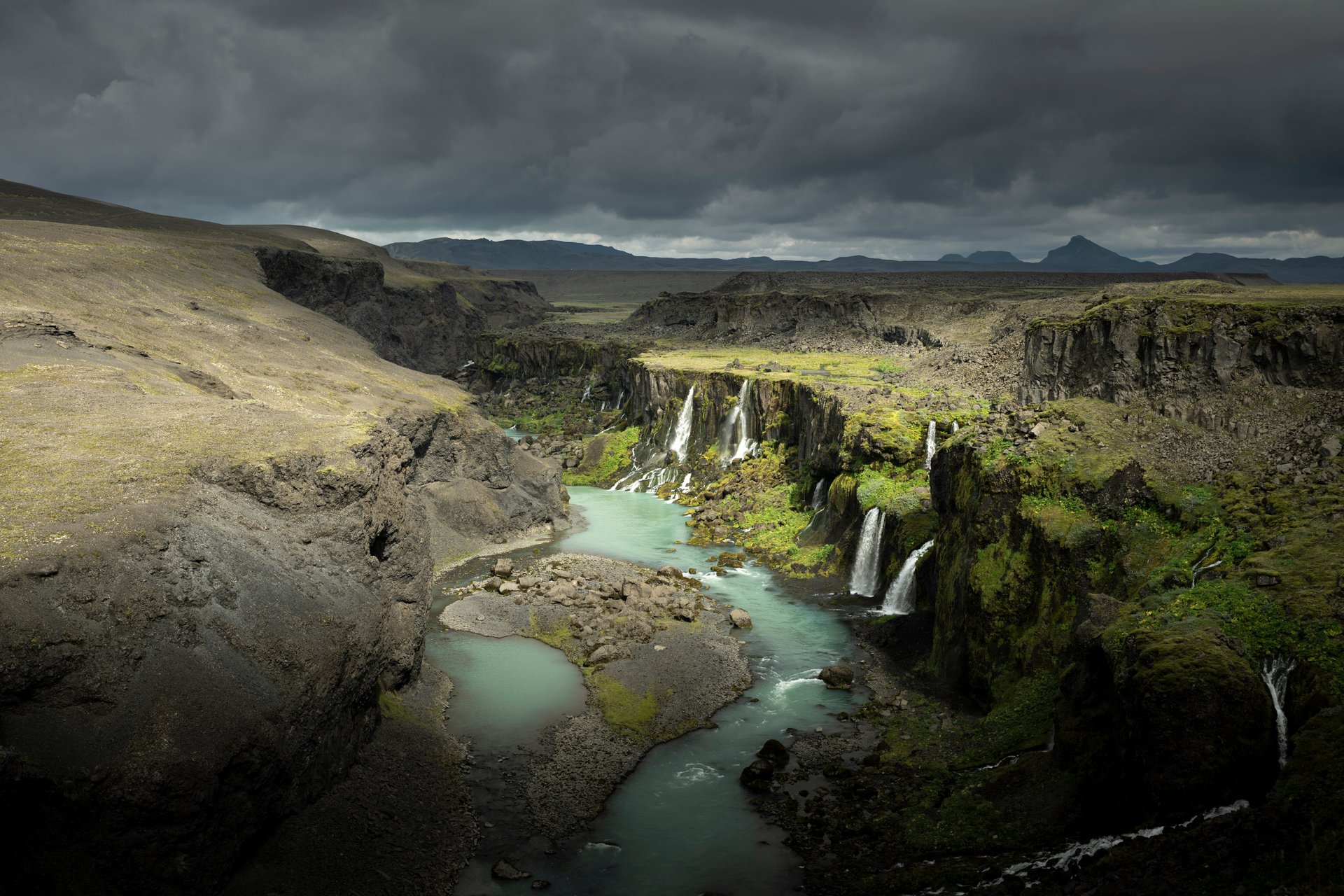
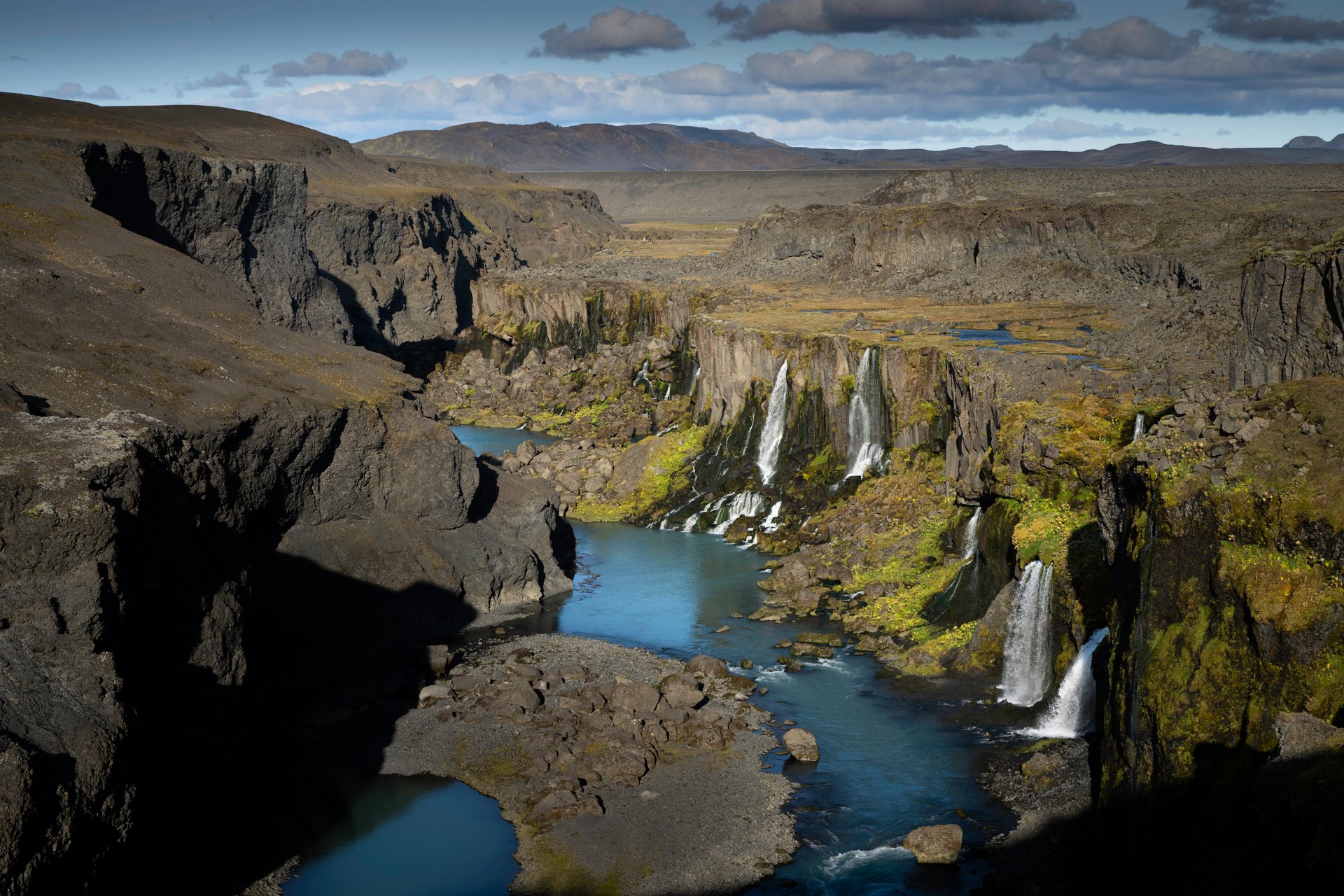
Sigöldugljúfur — “The Valley of Tears” — is a canyon where dozens of waterfalls pour from both sides simultaneously, cascading down moss-covered walls into a turquoise river below. It’s one of the most visually overwhelming places in Iceland, and it sits in the highlands where most tourists never venture.
Access requires a highland road (F-road, summer only) and a 4x4 vehicle. From the parking area, a short walk brings you to the canyon rim, where the view down into the valley is unlike anything else on this list. The sheer number of waterfalls — some wide, some thread-thin, all falling at once — creates a scene that doesn’t look like it should exist in reality.
This is a highlight of our Landmannalaugar day tour, and it’s the kind of place that justifies choosing a highland itinerary. You can’t see this from Route 1. You can’t see this from a tour bus. You need to go where the roads get rough — and that’s where the best of Iceland lives.
#7 — Nauthúsagíl
Where: South Iceland, near Þórsmörk How to visit: Þórsmörk Highland Valley Hiking
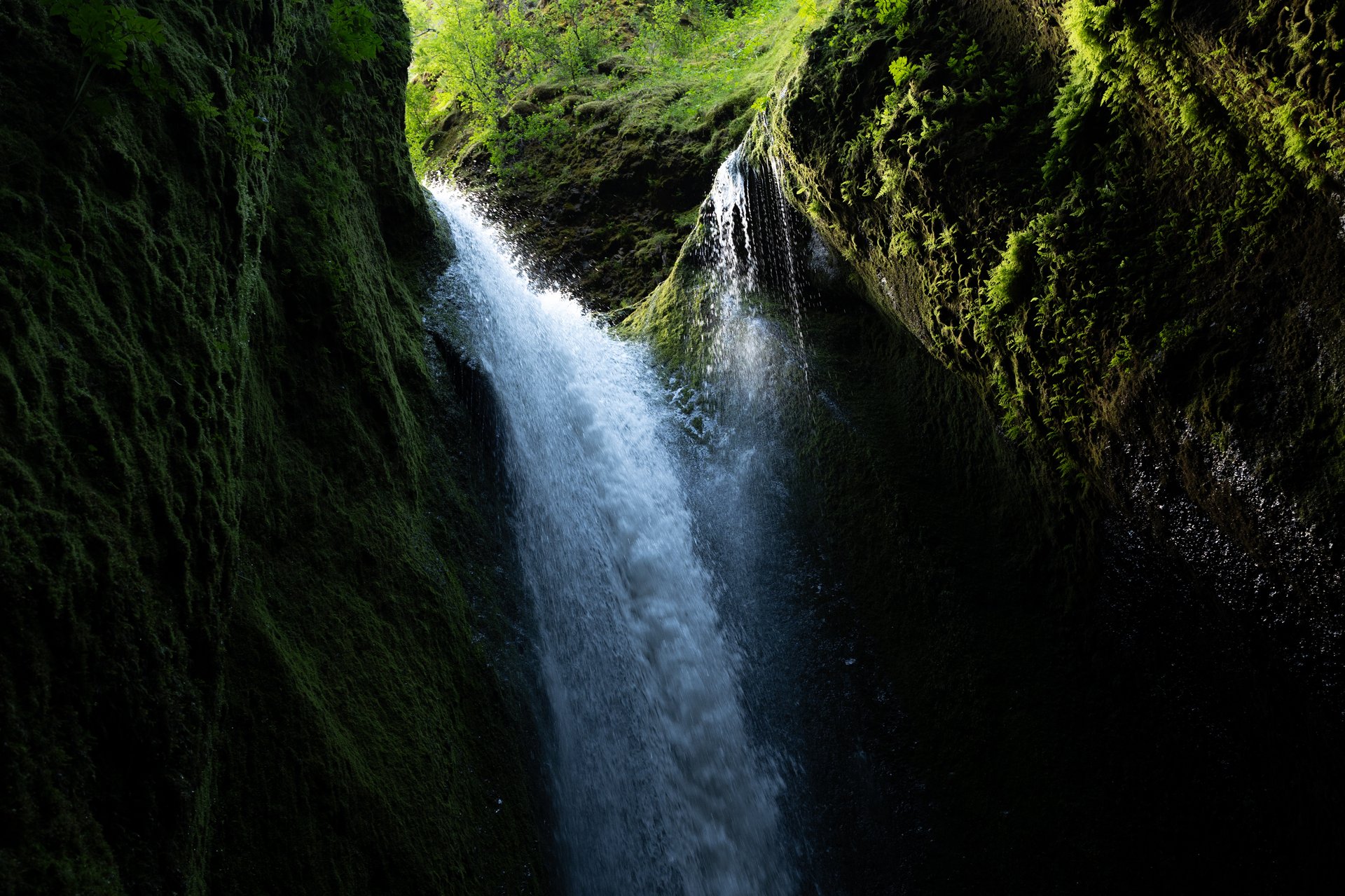
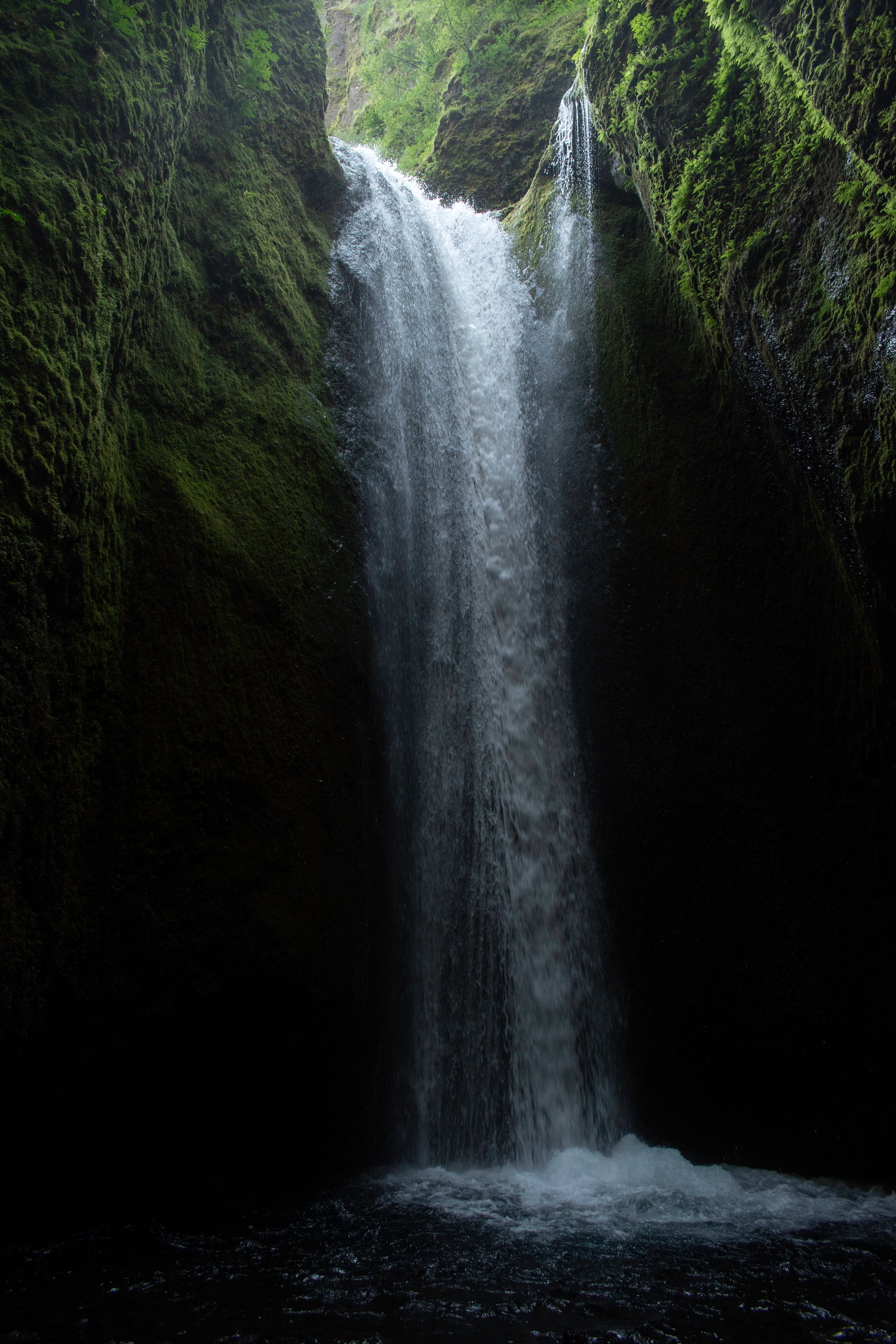
Nauthúsagíl is less a waterfall and more an experience. You follow a narrow slot canyon, wading through ankle-deep water, gripping a chain bolted to the rock wall, until you reach a hidden cascade at the back of the gorge.
The canyon walls tower above you, streaked with green moss and dripping with moisture. The light barely reaches the floor. And at the end, the waterfall pours down from an opening above, splashing into the pool at your feet. It’s intimate, dramatic, and completely different from any other waterfall experience in Iceland.
Getting to Nauthúsagíl requires a capable vehicle and some adventure tolerance — it’s located on the road toward Þórsmörk, one of Iceland’s most spectacular highland valleys. On our Þórsmörk tour, we include this as a stop that consistently ranks as a trip highlight.
#6 — Brúarfoss
Where: Golden Circle How to visit: Golden Circle Farm to Table (with customization) · Golden Circle Essentials
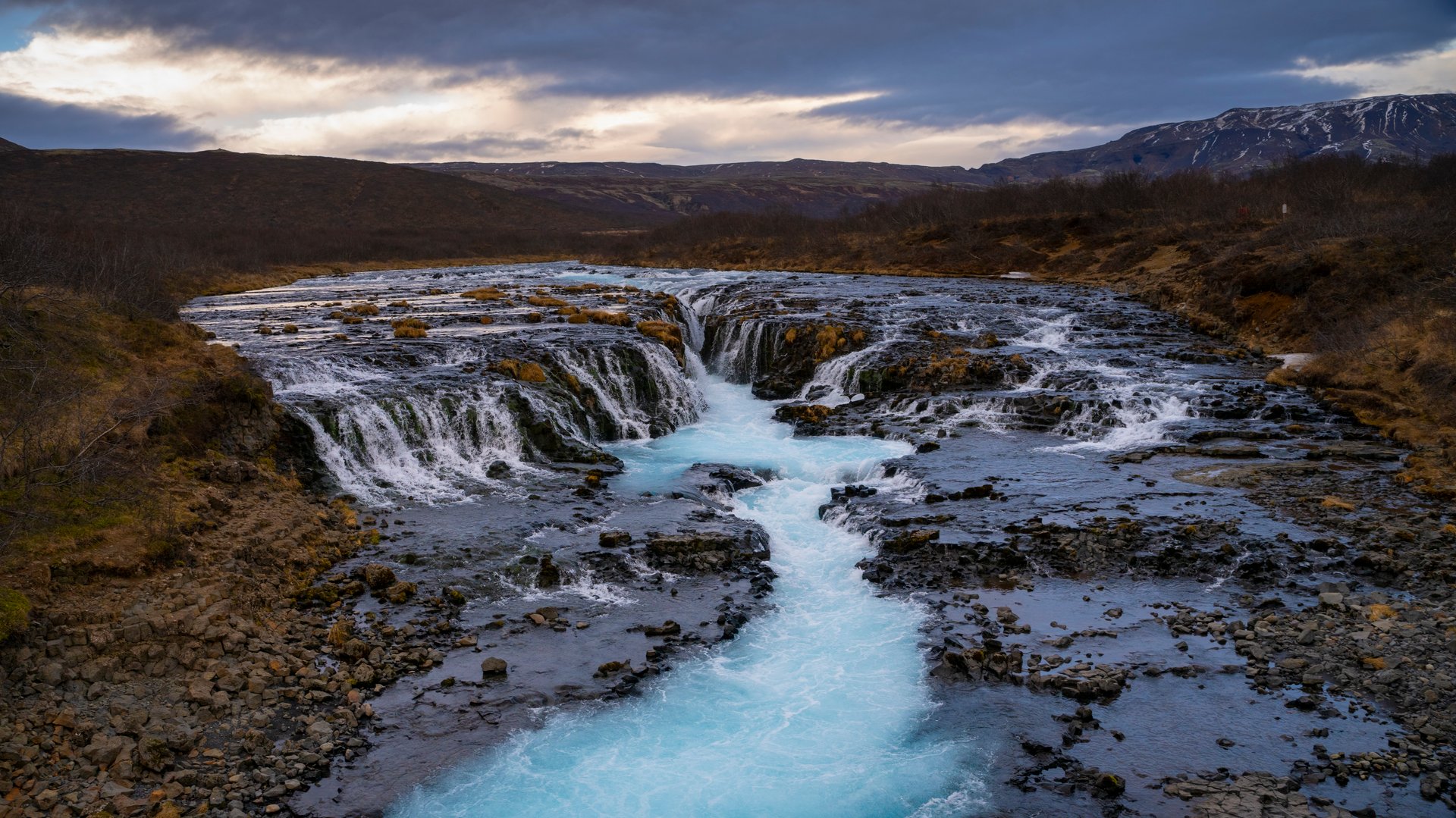
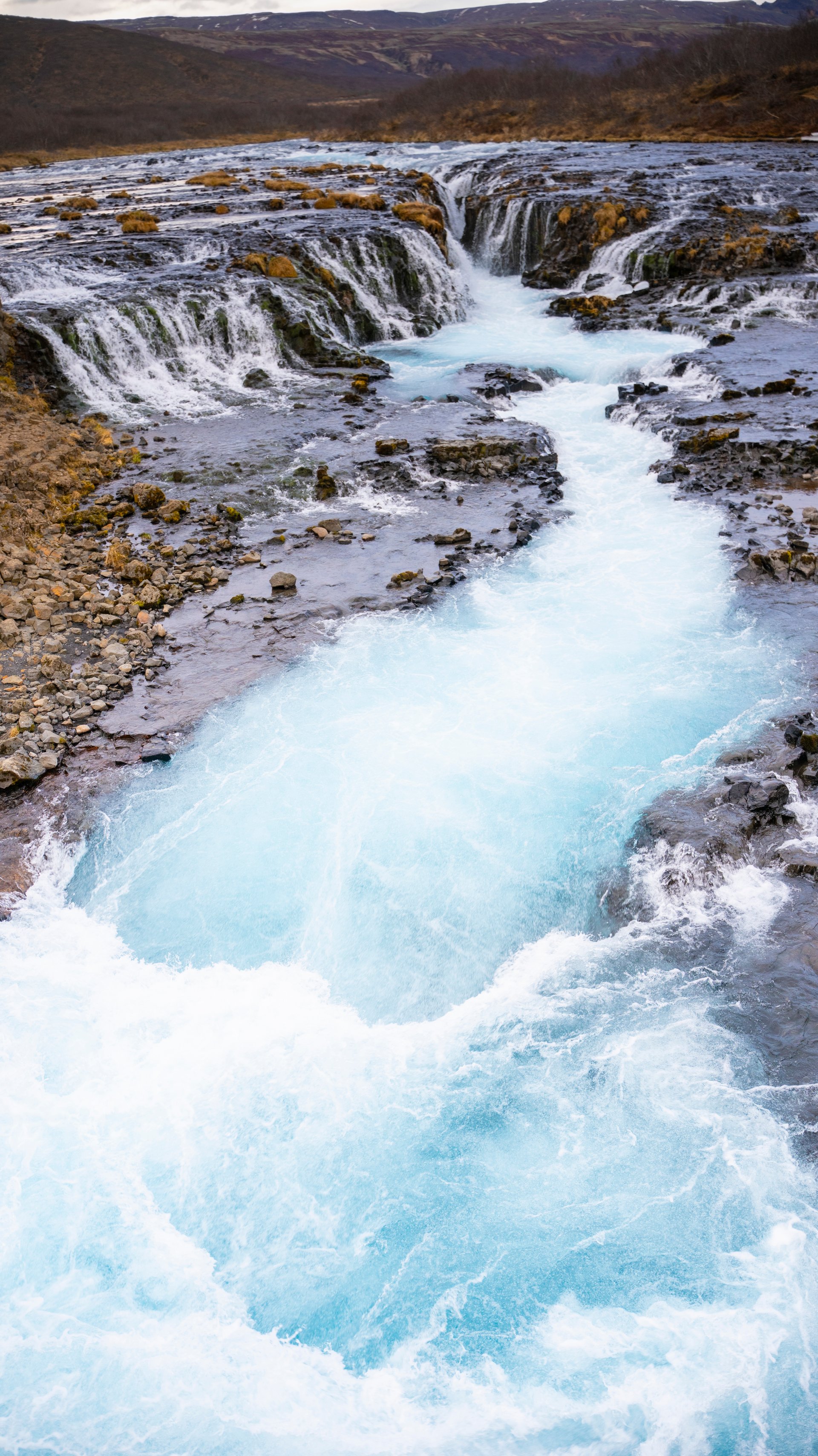
Brúarfoss is Iceland’s bluest waterfall. The color of the water — an intense, almost unnatural turquoise — comes from glacial sediment filtered through lava rock, and no photograph does it justice. You stand there, look at the water, and your brain insists it must be edited. It’s not.
The waterfall itself is relatively small: a series of cascades where the Brúará river splits into channels and drops through rock formations. But the color is what stops people. On an overcast day, the blue intensifies. In winter, with snow on the banks, the contrast is extraordinary.
Brúarfoss used to be a well-kept local secret, but its popularity has grown — partly because of social media, partly because it really is that striking. The trail from the parking area is roughly 3.5 km each way, flat and easy. We include it on our Golden Circle tours when clients want to see something beyond the standard stops, and it never fails to leave an impression.
#5 — Goðafoss
Where: North Iceland How to visit: Ring Road 7 Days · Ring Road & Highlands 10 Days
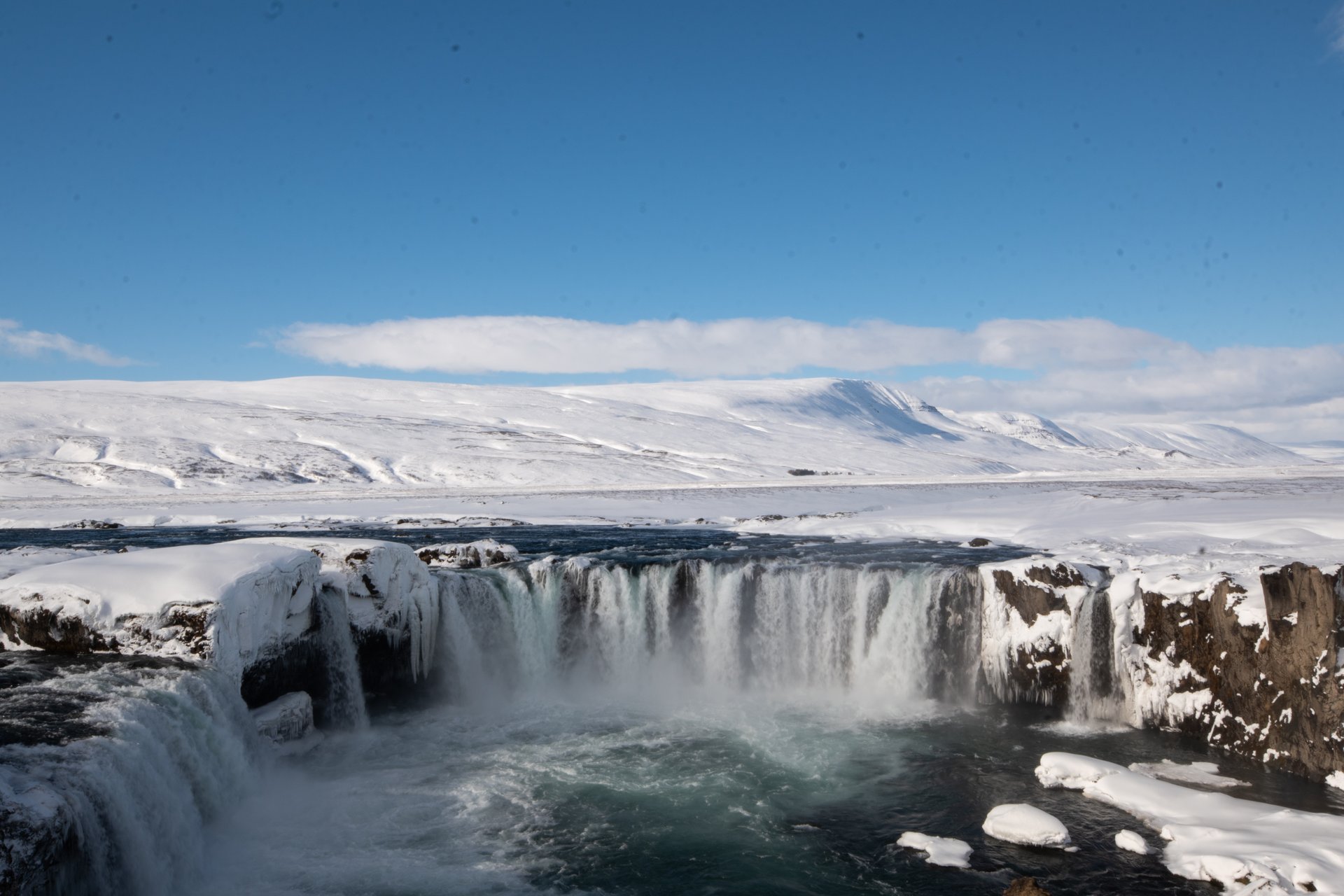
Goðafoss — “Waterfall of the Gods” — earned its name in the year 1000, when the lawspeaker Þorgeir Ljósvetningagoði threw his Norse pagan idols into the falls after Iceland officially adopted Christianity. It’s a moment that changed the country’s history, and the waterfall has carried that weight ever since.
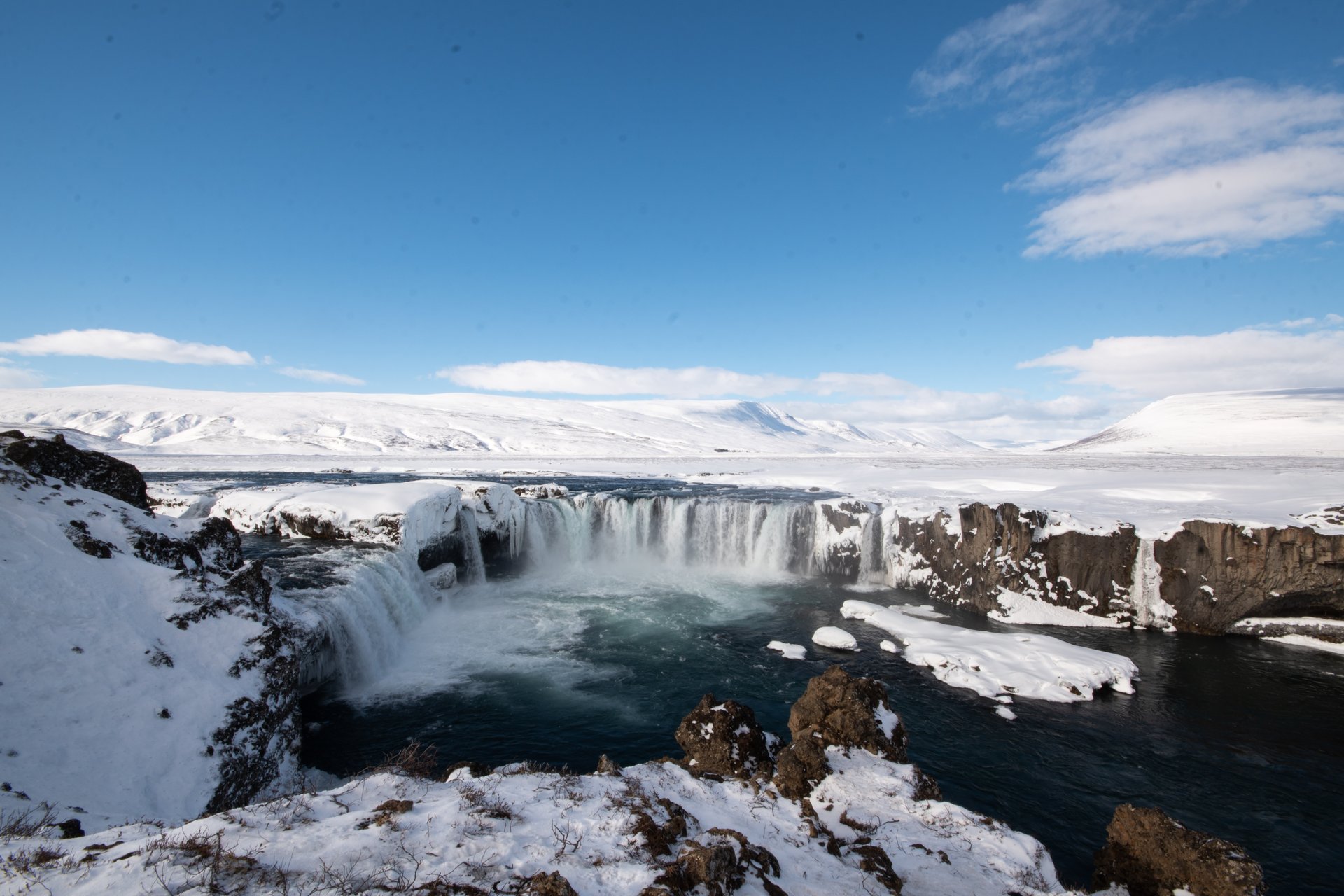
Physically, Goðafoss is a wide, horseshoe-shaped falls where the Skjálfandafljót river drops 12 meters across a 30-meter-wide front. It’s not the tallest, but the symmetry and the power of the water spreading across that curved edge is mesmerizing. In winter, the partially frozen falls are among the most photographed scenes in North Iceland.
Both sides of the river offer viewing platforms, and each gives a completely different perspective. The east side gets you close to the cascade; the west side gives you the iconic wide shot. On a Ring Road tour, Goðafoss is a natural stop between Akureyri and Mývatn — and one that delivers every time.
#4 — Glymur
Where: West Iceland, Hvalfjörður How to visit: Glymur Waterfall Hike
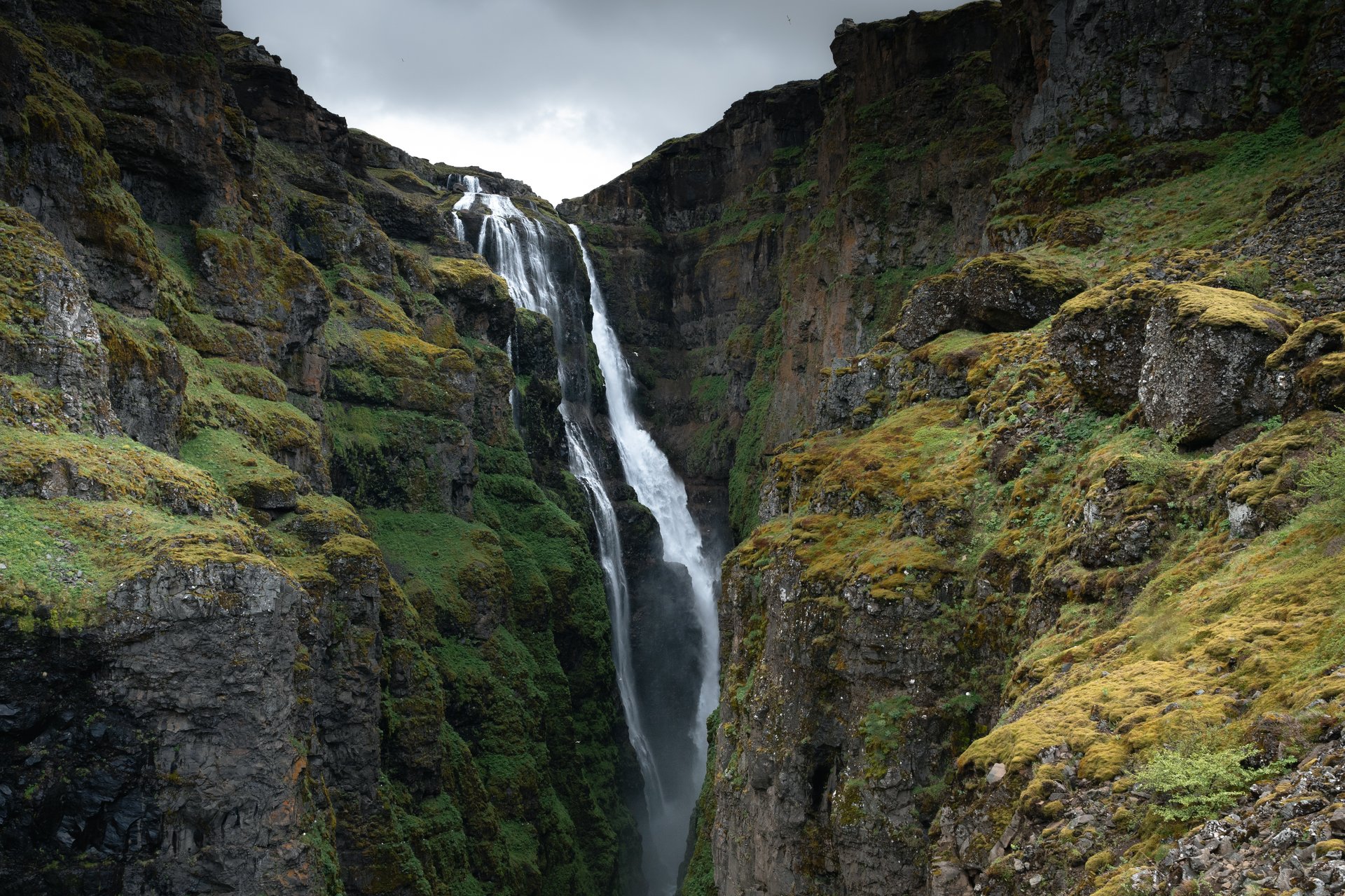
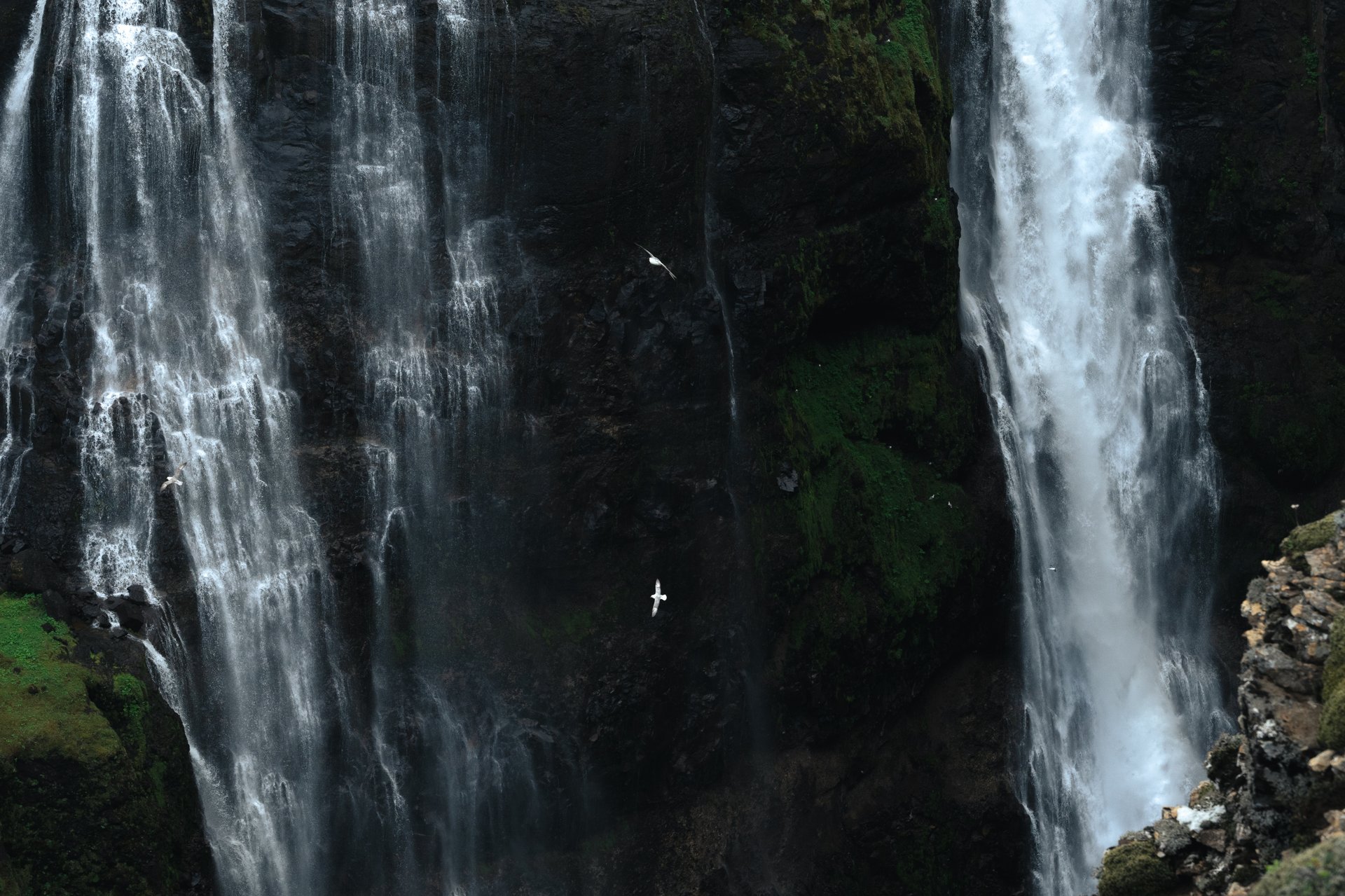
We already wrote a full entry on Glymur in our Best Hikes Near Reykjavík article — and it topped that list too. At 198 meters, it’s Iceland’s second-tallest waterfall (after the glacially revealed Morsárfoss), and the hike to reach it is one of the best day adventures within an hour of the capital.
The full experience involves walking through a cave, climbing through birch woodland along a deepening canyon, fording a river, and arriving at a viewpoint where you look straight down the full 198-meter drop. It’s a proper hiking challenge — not a pull-up-and-photograph waterfall — and the payoff matches the effort.
Glymur is the centerpiece of our dedicated Glymur Waterfall Hike day tour. Having a guide who knows the trail, the river conditions, and the best timing makes this a safer and significantly better experience than going alone.
#3 — Kirkjufellsfoss
Where: Snæfellsnes Peninsula How to visit: Private Snæfellsnes Tour
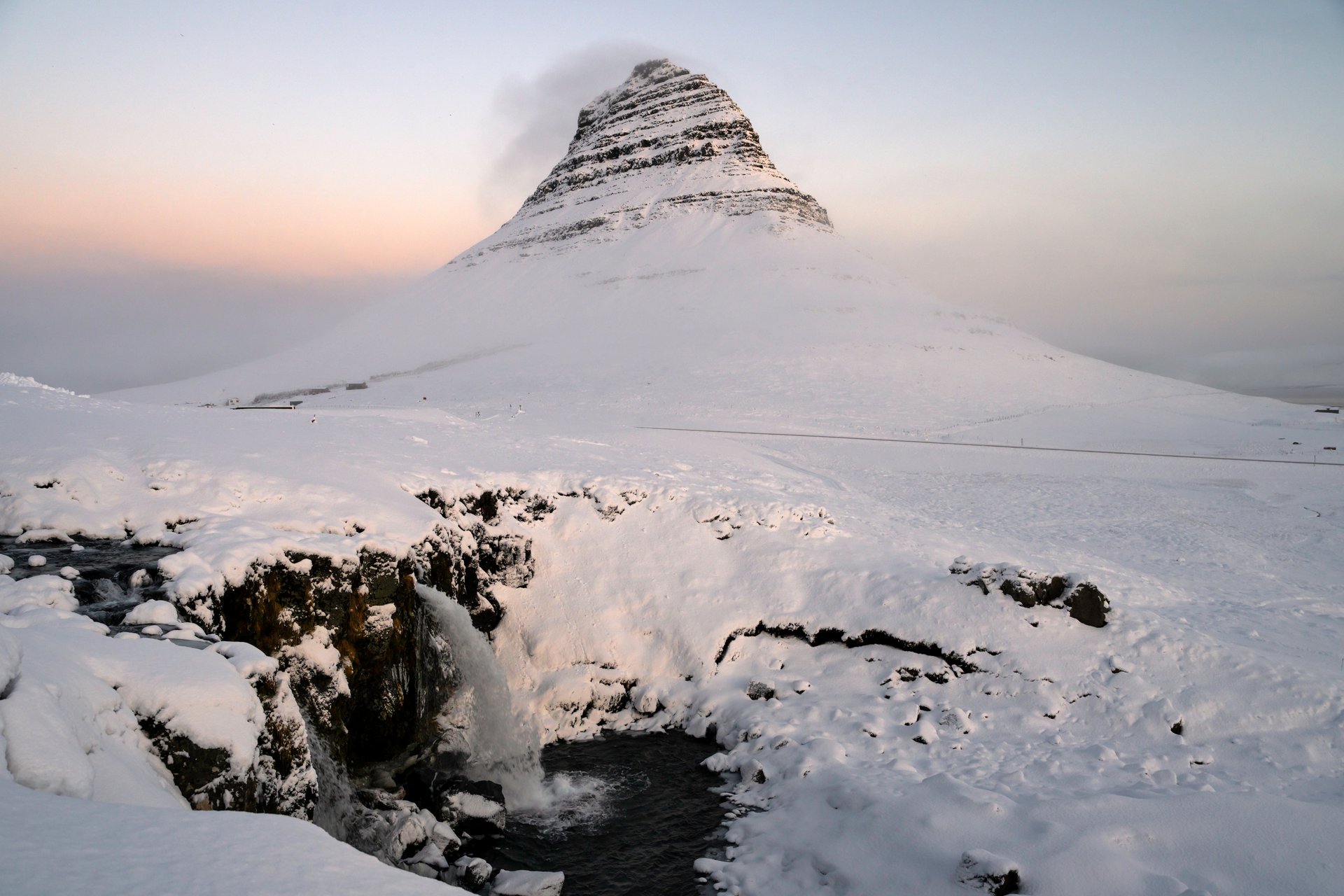
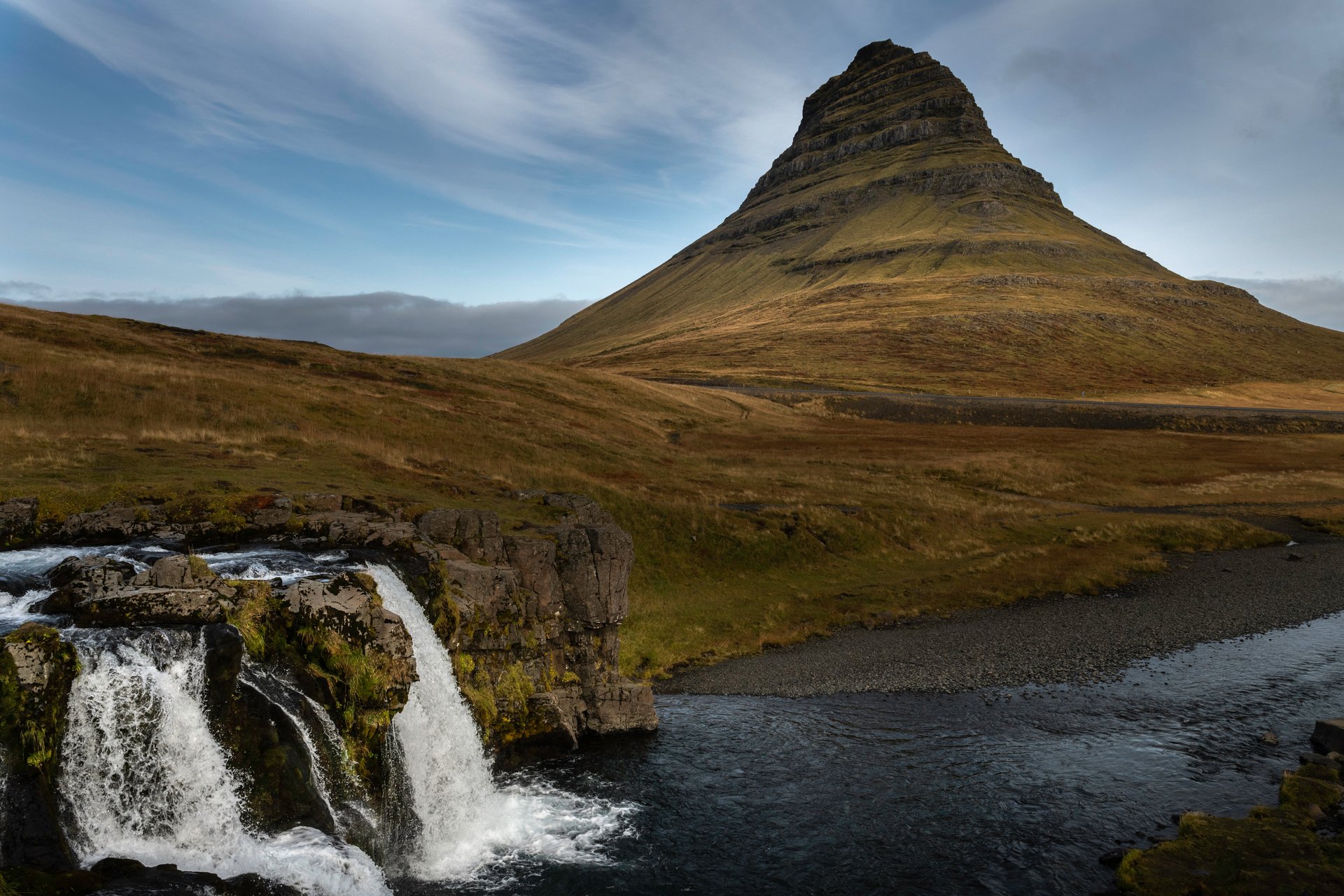
Kirkjufellsfoss is a modest waterfall by Icelandic standards — but paired with Kirkjufell mountain behind it, it creates one of the most iconic compositions in the country. This is the shot you’ve seen on magazine covers, tourism campaigns, and that Game of Thrones episode. The mountain’s conical shape, reflected in the pool below the falls, is geometric perfection.
The waterfall itself is a double cascade, easy to access from a short path just off the road in the town of Grundarfjörður. The magic is entirely in the framing: mountain, falls, and — if you’re there in winter — the Northern Lights arcing over everything.
Timing and light are everything here. On our Snæfellsnes tours, we know exactly when to arrive for the best conditions — and we know the angles that make the difference between a good photo and the photo.
#2 — Fagrifoss
Where: Highlands, road to Laki How to visit: 4-Day Highlands South (custom)
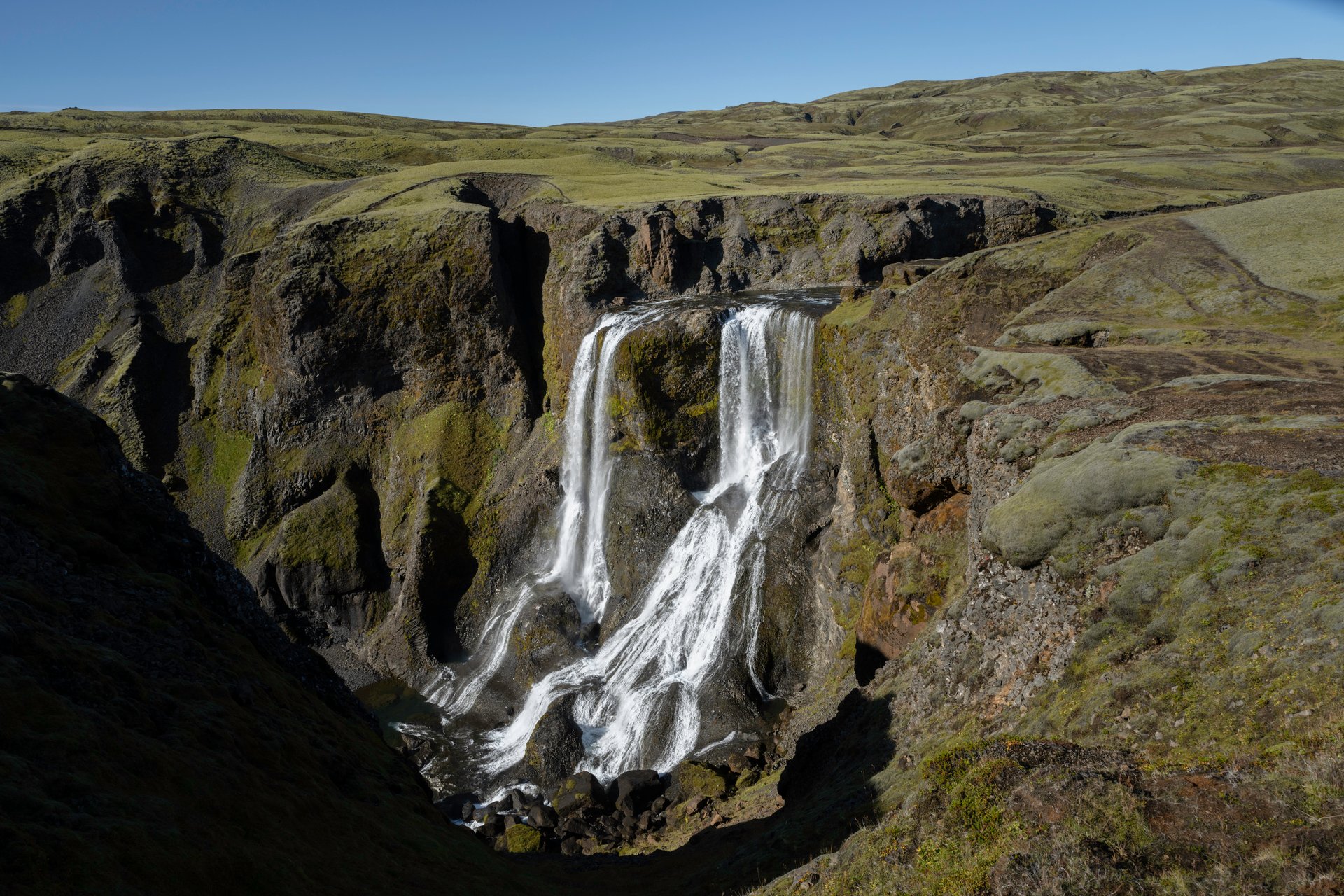
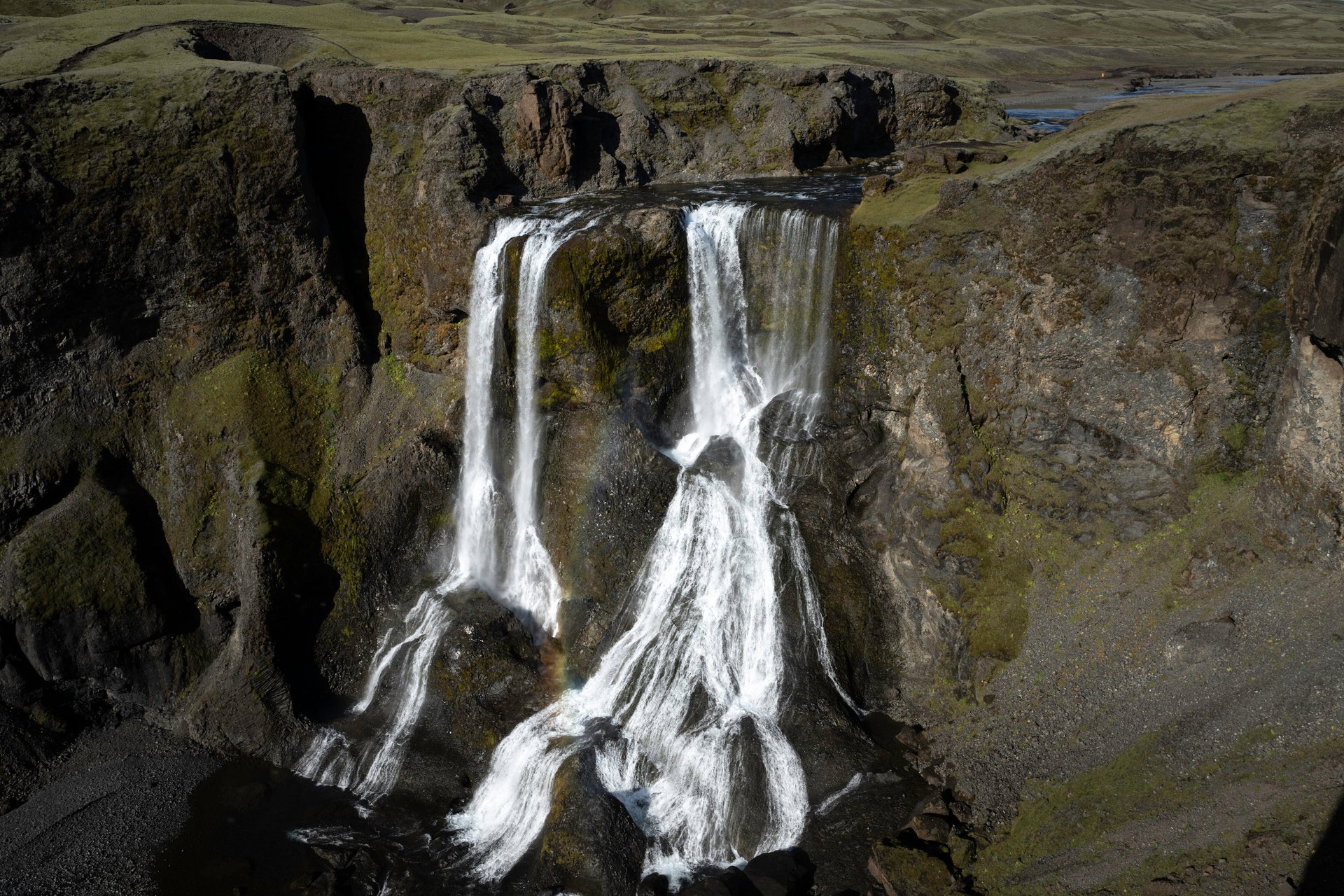
Fagrifoss — “Beautiful Falls” — lives up to its name so completely that it almost feels like cheating. This highland waterfall drops roughly 80 meters into a dramatic amphitheater-shaped canyon, with columnar basalt walls that curve around the falls like the inside of a cathedral.
Getting to Fagrifoss requires driving the highland road toward Laki (F206), which means a capable 4x4 and summer access only. The road itself passes through one of the most striking volcanic landscapes in Iceland — the Laki craters, responsible for one of the most devastating eruptions in recorded history.
Very few visitors ever see Fagrifoss. It’s not on the Ring Road. It’s not on any standard itinerary. It exists for those who are willing to go deeper into Iceland, past the famous names and paved roads, into the highlands where the landscape earns a different kind of respect. For us, Fagrifoss is the waterfall that represents what Iceland really is when you get away from the crowds.
#1 — Dynjandi
Where: Westfjords How to visit: Custom expedition to the Westfjords
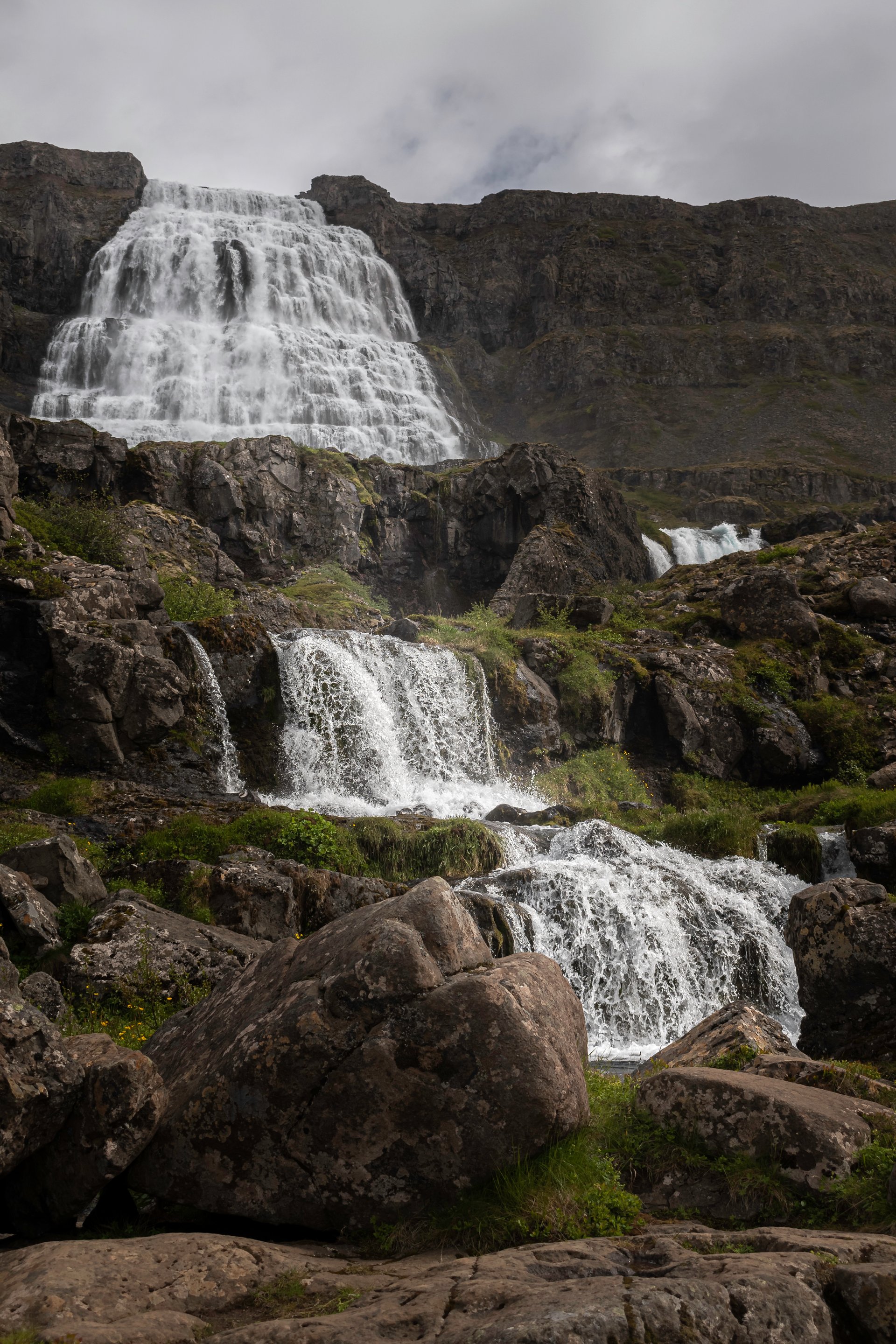
Dynjandi is the waterfall we’d show someone if they could only see one. And it’s not even close.
The main cascade — technically named Fjallfoss — drops 100 meters in a trapezoidal shape, widening as it falls, like a bridal veil draped across the mountainside. But Dynjandi isn’t just one waterfall. Below the main falls, six additional cascades step down to sea level, each with a different character, each worth stopping for.
The setting is as dramatic as the water. Dynjandi sits at the head of Arnarfjörður, one of the most remote and beautiful fjords in Iceland. To get there, you drive hours through some of the emptiest, most spectacular landscapes in the country — towering fjord walls, sheep-dotted hillsides, and a silence that the south coast can’t match.
The Westfjords are the part of Iceland that most visitors skip. Only about 10% of tourists ever make it here, and that exclusivity is part of what makes Dynjandi so special. There are no tour buses. There are no crowds. There is only you, the waterfall, the fjord, and the Atlantic stretching out below.
Getting to Dynjandi requires commitment — it’s a multi-day affair from Reykjavík — but it’s the kind of commitment that pays back tenfold. This is Iceland at its most magnificent, and Dynjandi is the crown jewel.
Send us a quote request for a personalised itinerary or contact us to design a waterfall-focused itinerary built around your group.
FAQ
What is the most famous waterfall in Iceland? Gullfoss, Seljalandsfoss, and Skógafoss are the three most visited, all located on the Golden Circle or South Coast routes. They’re famous for good reason — but Iceland’s best waterfalls extend far beyond these three.
Can I see waterfalls in Iceland in winter? Yes. Many of Iceland’s most accessible waterfalls — including Gullfoss, Skógafoss, Seljalandsfoss, and Goðafoss — are visitable year-round. Some, like Öxarárfoss, are arguably more beautiful in winter when partially frozen. Highland waterfalls (Sigöldugljúfur, Fagrifoss, Háifoss) are only accessible in summer.
Do I need a guide to visit waterfalls in Iceland? The most popular waterfalls are accessible independently. However, many of the best — especially those in the highlands and Westfjords — require local knowledge, capable vehicles, and familiarity with changing conditions. A private guide also knows the timing, angles, and lesser-known stops (like Kvernufoss and Gljúfrabúi) that turn a waterfall tour into something genuinely exceptional.
Which waterfalls require hiking? Glymur (3.5–5 hour hike), Svartifoss (45 minutes), Hengifoss (40 minutes each way), and Nauthúsagíl (slot canyon walk) all require a hike. The rest are accessible with short walks from parking areas.
What’s the best waterfall tour in Iceland? It depends on what you’re looking for. Our Viking Heritage & Waterfalls tour packs four remarkable waterfalls into a single day. For the South Coast classics, the South Coast Discovery includes Seljalandsfoss and Skógafoss. For the ultimate waterfall hike, the Glymur Waterfall Hike is unbeatable.